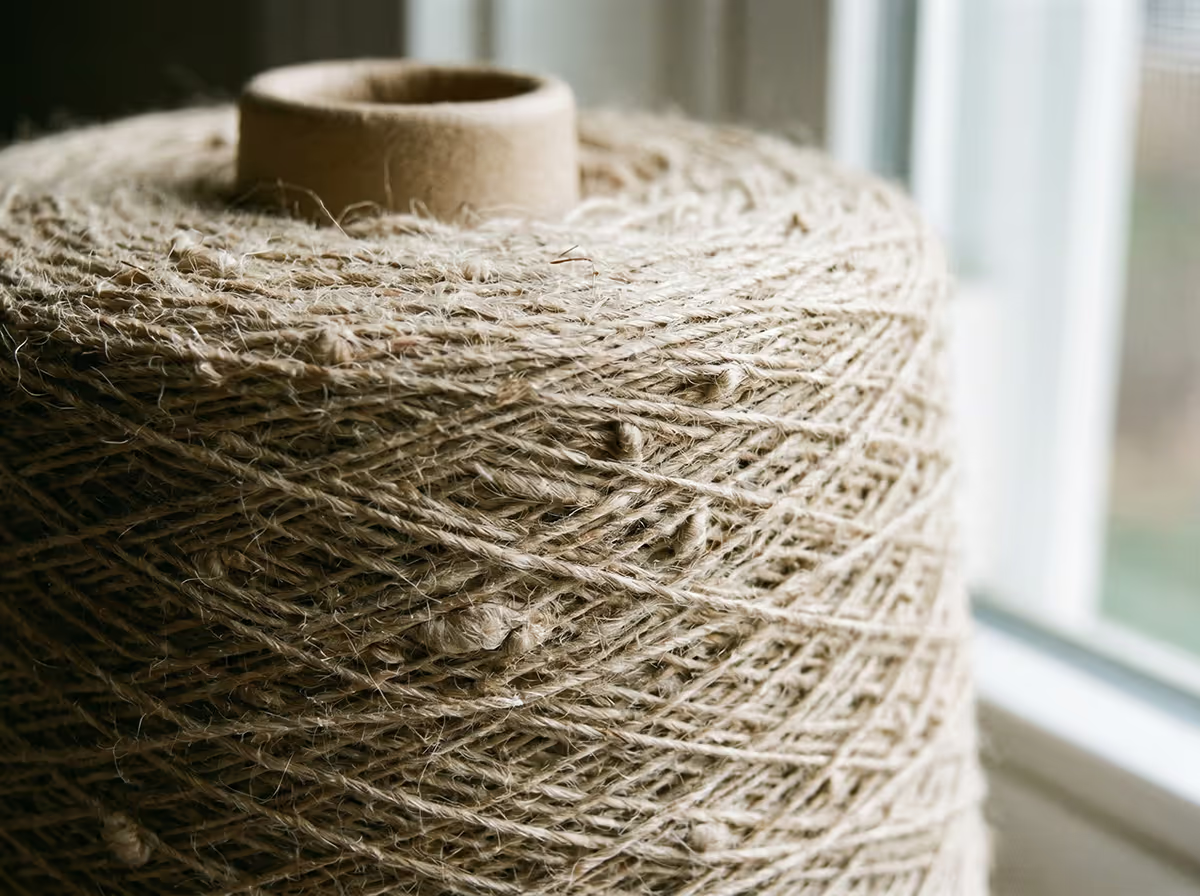
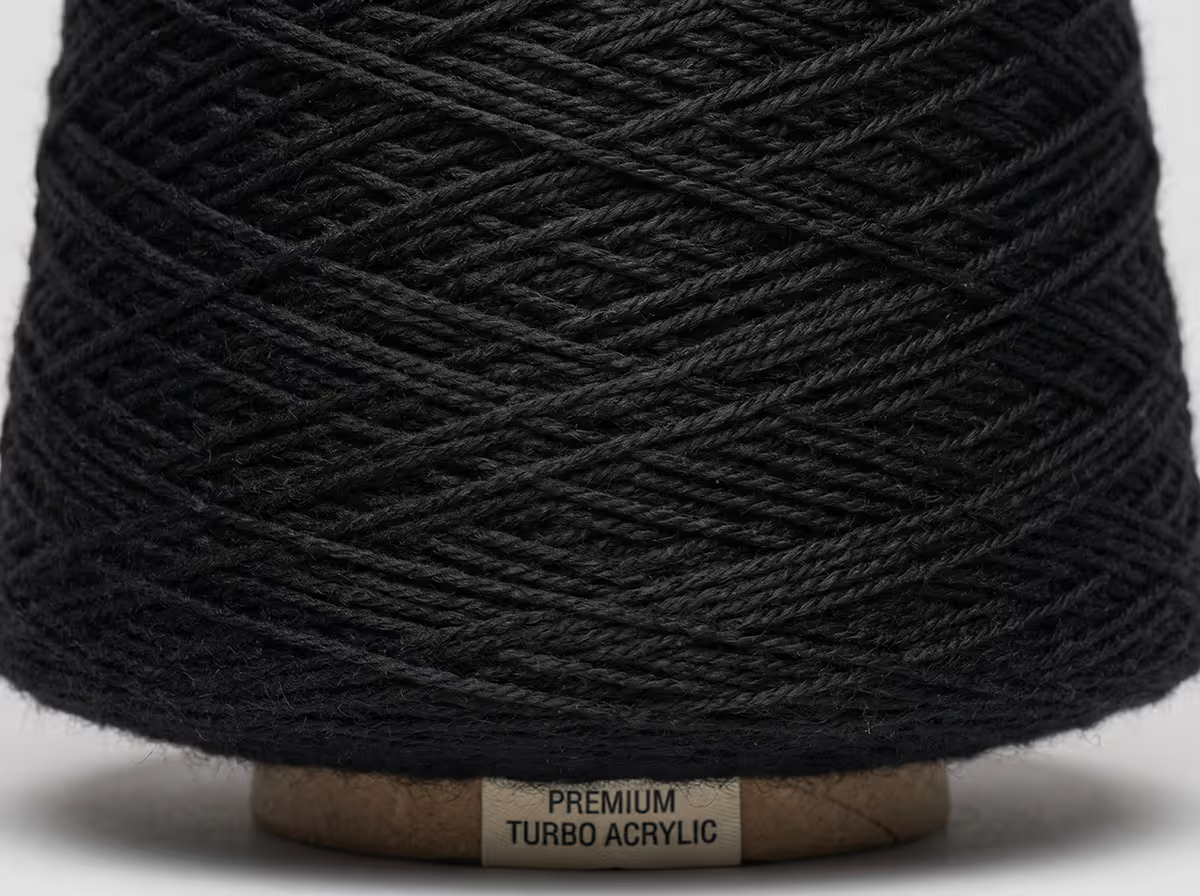
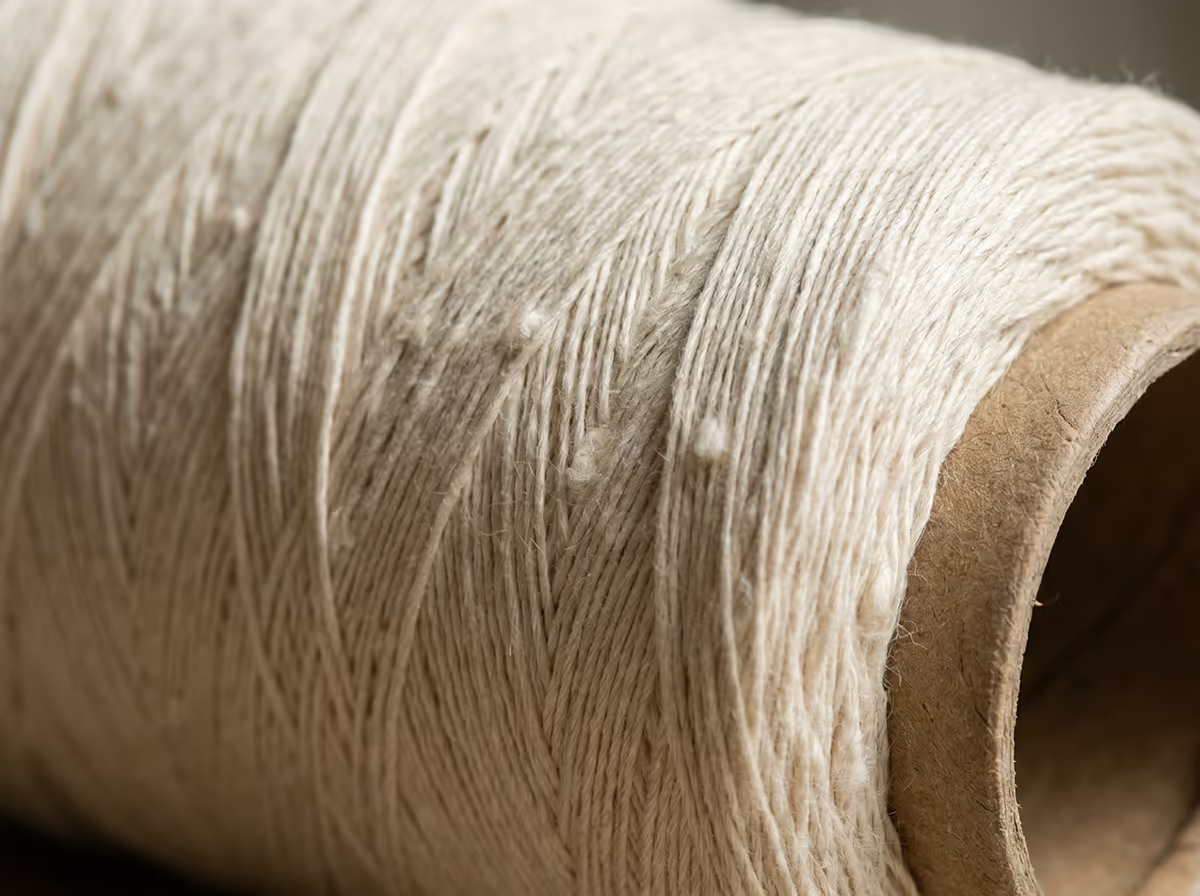
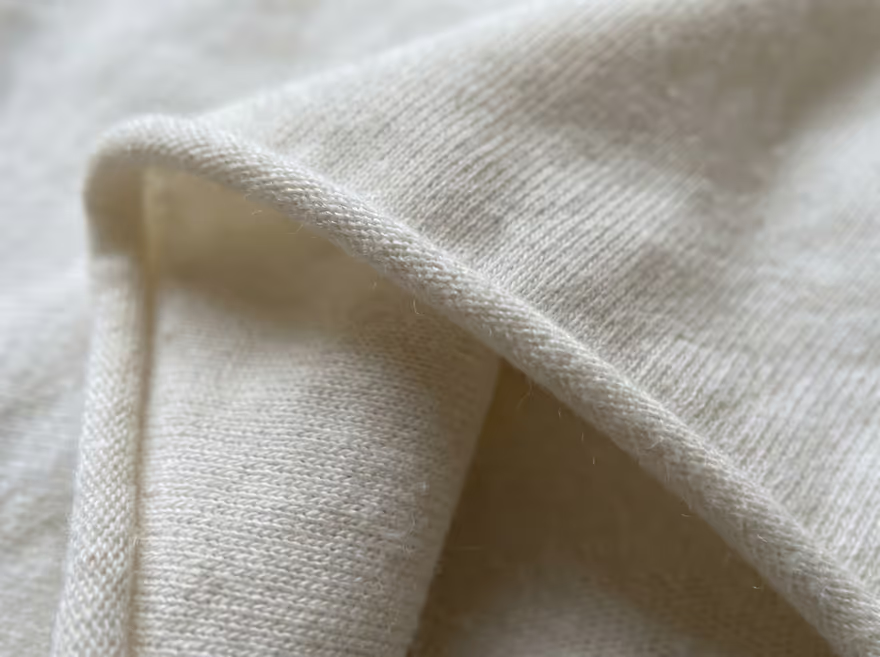
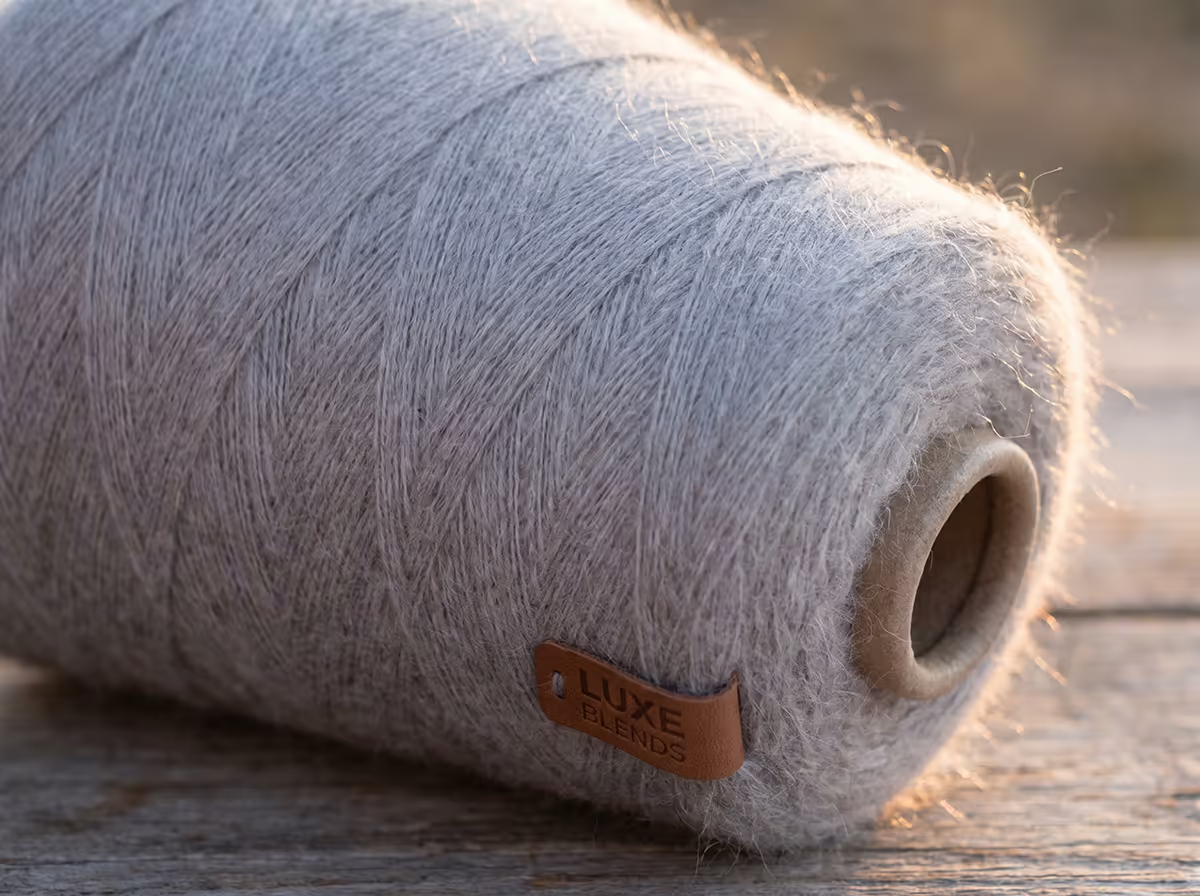
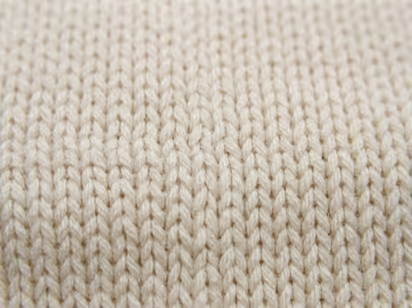
Near zero-waste knitwear manufacturing in Turkey. Certified organic and recycled yarns. Traceable supply chain for the brands that care about what's behind the label.
Flat-knit is inherently one of the most sustainable manufacturing methods in garment production. Here's what that means in practice at Kiwi Giyim — where all in-house production is flat-knit, knit-to-shape, near zero cutting waste by design.
vs. ~15–30% in cut-and-sew; knit-to-shape eliminates cutting waste
WHOLEGARMENT & fully-fashioned — zero cut-fabric offcuts
GOTS · GRS · OEKO-TEX Std 100 · BCI — certified yarns sourced from accredited suppliers
Single-site factory — named yarn spinners & supplier certificates passed to you on request
Conventional cut-and-sew garment manufacturing wastes 15–30% of fabric. Flat-knit changes the equation entirely. At Kiwi Giyim, every garment panel — and on WHOLEGARMENT machines, the entire garment — is knitted to the exact shape required. There is no fabric to cut, and therefore almost no offcut waste.
Our Shima Seiki WHOLEGARMENT machines produce complete three-dimensional garments in a single pass, eliminating seam waste and linking offcuts entirely. On Stoll CMS fully-fashioned lines, waste is reduced to yarn ends and tension samples — typically under 5% of yarn input by weight.
All production waste yarn is collected and either re-balled for sampling or returned to certified recyclers. We track yarn efficiency per order run and share waste-rate reports with buyers on request.
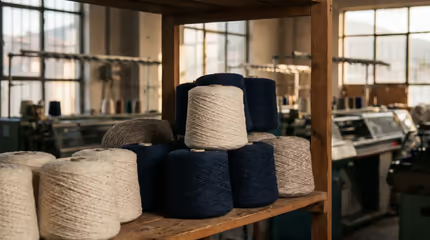
Every standard listed here reflects how we source and what we produce — not aspirational branding. Kiwi Giyim does not hold facility-level certifications — we source certified yarns from accredited suppliers and produce to your target market's requirements, passing the supplier's certificates and traceability to you. Where market compliance standards apply (REACH, CPSIA, GPSR), we use compliant, certified materials so your product can meet those requirements.
We source OEKO-TEX Standard 100-certified yarns from accredited suppliers — covering over 100 harmful substances including pesticides, heavy metals and formaldehyde. The supplier's OEKO-TEX certificate and batch traceability are passed to you on request, so your end product can carry the credentials your market expects.
We source GOTS-certified organic cotton yarn from accredited spinners — covering the full chain from farm to spinning mill with no prohibited pesticides, no synthetic fertilisers, and fair labour requirements at every stage. Supplier GOTS certificates and chain-of-custody records are passed to you on request for any flat-knit order that uses this yarn.
We source GRS-certified recycled polyester and other recycled fibre yarns from accredited spinners — with full chain-of-custody traceability from post-consumer or post-industrial waste through spinning. Supplier GRS certificates are passed to you on request, supporting your recycled content claims and Scope 3 reporting needs.
We source BCI Better Cotton through accredited supply chains — supporting more responsible farming practices at field level, including water stewardship, reduced pesticide use and improved farmer livelihoods. Mass-balance supply chain records from the accredited BCI supplier are passed to you on request.
We produce using compliant, certified materials so your product can meet REACH (EU chemical regulation), CPSIA (US children's product safety) and GPSR (EU General Product Safety Regulation) requirements for your target market. Yarn-level compliance documentation from our accredited suppliers is available on request.
Every yarn we offer can be sourced from accredited suppliers with the relevant certification — OEKO-TEX, GOTS, GRS or BCI. Sustainable yarn options are not a premium niche — they are standard production-line choices across all gauges and techniques at Kiwi Giyim, with supplier certificates passed to you on request.
Kiwi Giyim is a single-site, founder-owned factory in Gaziantep. There are no sub-contractors, no second-tier facilities, and no hidden supply chain layers. When you ask who made your garments, we can answer precisely — it was our 50+ in-house team, at our machines, on our floor.
We maintain full yarn-to-garment traceability records including named spinners, the supplier's certificate references and batch data. These records are available for buyer due diligence at any time and are structured to support supply-chain reporting and due-diligence requirements.
Certifications are the floor, not the ceiling. Here is what our sustainability commitment looks like in practice on every order we produce.
Knit-to-shape technology is not optional — it is our primary production method. Fully-fashioned and WHOLEGARMENT techniques are offered on every order as the default, not as a premium add-on.
We only specify yarns as "GOTS", "GRS" or "OEKO-TEX" when we have sourced them from an accredited supplier holding the relevant certificate for that specific batch. The supplier's certificate copies are passed to you on request — we do not make claims we cannot back with sourcing evidence.
Gaziantep's position at the crossroads of Europe, the Middle East and Asia means efficient sea, land and air routing worldwide — avoiding the long-haul emissions of deep-ocean supply chains. Shorter routes to nearby markets translate directly into a lower transport carbon footprint compared to sourcing from the Far East.
Premium flat-knit garments are designed to last. Our machine gauge range (3GG–14GG), yarn quality and finishing processes are optimised for durability — because the most sustainable garment is the one worn for years, not seasons.
Tell us your sustainability requirements — certification tier, yarn preference, traceability scope. We'll match a production plan that meets your product and reporting needs. First sample in 10–14 days.