Knitwear defects caught at the yarn stage cost almost nothing to fix. The same defects caught after bulk production has shipped cost a shipment. A 4-stage QC process — IQC, IPQC, OQC and Final Inspection — distributes quality checks across the production timeline so problems surface as early as possible.

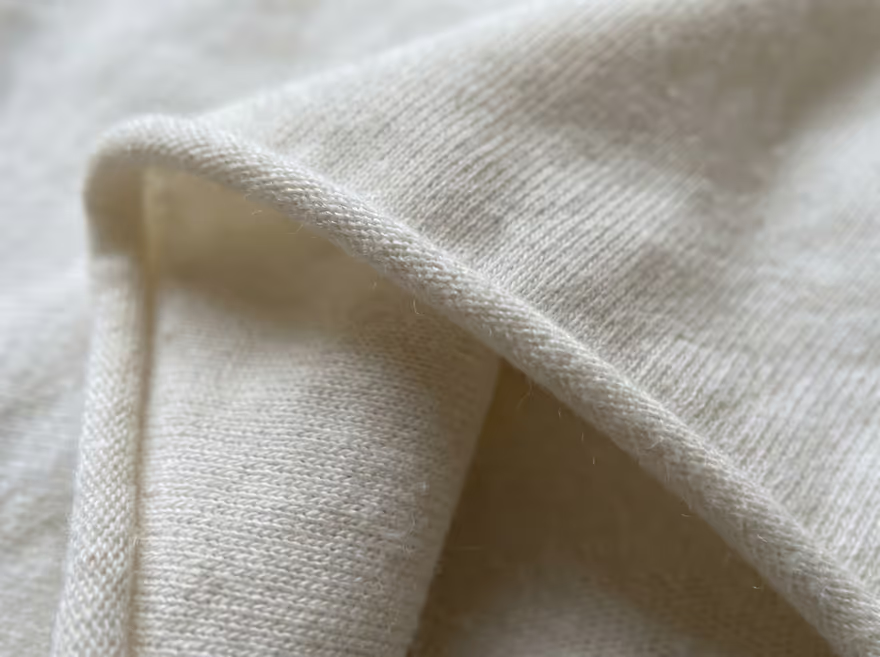
Knitwear quality control — hem and finishing detail, Kiwi Giyim
Hem finishing QC: seam allowance, fold consistency, and label placement checked per unit

The 4-Stage QC Framework

01

IQC — Incoming Quality Control

Yarn inspection before production begins. Check: correct yarn count and composition, lot consistency (same dye lot for each colorway), physical condition (no broken filaments, contamination, moisture damage), and documentation (fiber certificate, dye lot record). A mismatch at this stage — wrong lot, off-shade yarn — ruins the entire batch.

02

IPQC — In-Process Quality Control

Checks during knitting: panel dimensions vs spec, stitch count per cm (gauge confirmation), tension consistency across the machine width, and early visual inspection for dropped stitches or barré. IPQC identifies machine setup issues before hundreds of panels are produced incorrectly.

03

OQC — Outgoing Quality Control

AQL-based inspection of finished garments before packing. Measure a statistically valid sample against the measurement spec, inspect for visual defects (dropped stitch, hole, barré, seaming defect), and check trim and label placement. Standard for mid-premium apparel: AQL 2.5, Inspection Level II per ANSI/ASQ Z1.4.

04

Final Inspection (Pre-Ship)

A final check once goods are packed and ready to ship — often the stage where a third-party inspector is deployed. Verifies carton count, labeling, barcode scan, packing spec compliance and a final random AQL pull from packed cartons. This is the last opportunity to catch a discrepancy before the container closes.
Common Knitwear Defects to Know

Dropped stitch: A needle misses a loop, creating a visible hole or ladder in the fabric. Can occur from machine needle damage or incorrect tension. Usually caught in IPQC if checks are frequent enough. Barré: Horizontal streaks or bands of color or texture variation across the fabric width, caused by yarn lot inconsistency or tension variation. Hard to correct post-production — prevention is at IQC (lot control) and IPQC (tension). Pilling: Surface fiber tangling, typically from lower-twist yarns or fiber blends with short staple length. Assessed via Martindale or ICI pilling test against the spec's pill rating target. Seaming defects: Uneven linking stitch tension, dropped stitches in the seam, or misaligned panels at the seam. Visible in OQC visual inspection. Measurement deviation: Shrinkage from washing that wasn't predicted in pattern; tension variation across the run. Caught by measuring a sample set against the spec.

Third-Party Inspection

For US importers working with an overseas factory for the first time, a third-party pre-shipment inspection is a sensible investment. Agencies like Bureau Veritas, SGS, Intertek and QIMA operate in Turkey and can conduct final inspection against your AQL and measurement spec. We support third-party inspections and provide production documentation on request. An independent inspection doesn't replace the factory's own QC — it verifies it.

OEM Manufacturing

Quality at Kiwi Giyim

In-line and final AQL inspection, measurement report and photo evidence on every production run.

See quality process →

Questions about QC process before ordering?

We're happy to walk through our internal QC stages and discuss third-party inspection arrangements before you commit to sampling.

Related Guides

→ Knitwear Cost Breakdown: CMT, FOB and Full Package Pricing for US Brands → Fall/Winter Knitwear Production Calendar: Planning from Turkey → Holiday Sweater Sourcing Timeline: Q4 Planning Guide for US Brands
WhatsApp