Spring/Summer knitwear is a fundamentally different product category than Fall/Winter — and it requires different planning. The fibers are lighter (cotton, linen blend, viscose, silk blend), the machine gauges are finer (12gg, 14gg vs the 5gg or 7gg common in chunky F/W knitwear), and the construction options open up to include open-knit structures and crochet-look effects that aren't possible on coarser gauges. The production calendar is also compressed slightly differently: US spring retail delivery typically means a February warehouse arrival, which pushes bulk production to October–November of the prior year.

Machine Gauge: Why It Matters for S/S Knitwear

Gauge (gg) describes how many needles there are per inch on the knitting machine bed. A higher gauge means finer yarn and a more delicate fabric construction. For S/S knitwear, 12gg and 14gg are the most common production gauges — these produce the lightweight, refined surface you see in spring sweaters and fine-knit tops.
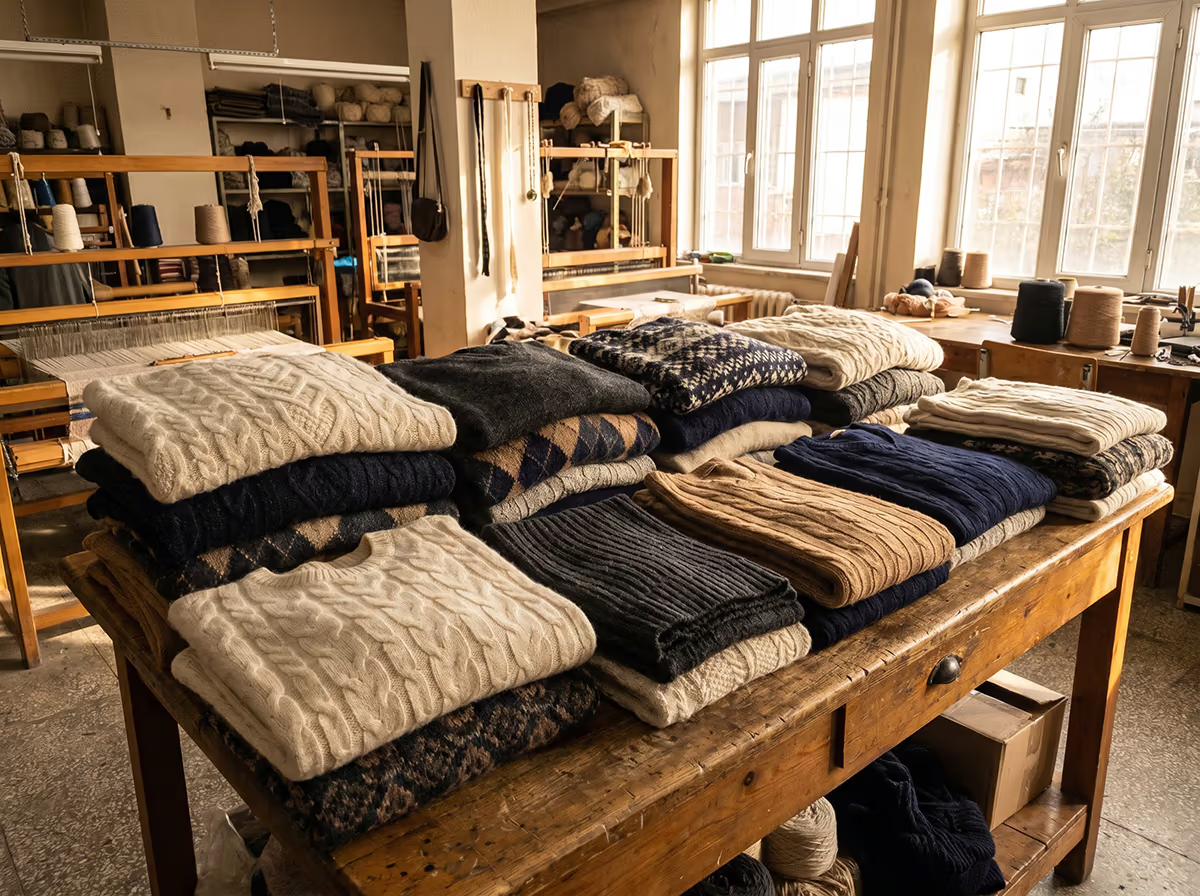
Private label knitwear samples — Kiwi Giyim OEM portfolio
OEM knitwear portfolio: private label programs from 250 units, custom construction and colourway
5gg / 7gg

Chunky / Bulky (F/W Typical)

Typical for chunky fall/winter sweaters. Thick yarn, open stitch appearance on the knit level. Fast to produce per unit. Not appropriate for lightweight S/S styles — the fabric would be too heavy and coarse.

10gg

Medium Gauge (Year-Round)

Mid-weight — works in lighter-weight fibers for transition-season pieces or lightweight cotton in heavier constructions. Versatile but not as refined as fine gauge for true S/S positioning.

12gg / 14gg

Fine Gauge (S/S Optimal)

The sweet spot for spring/summer. Fine gauge allows thinner yarns, tighter stitch formations, and the refined, lightweight hand feel associated with premium S/S knitwear. Shima Seiki WHOLEGARMENT machines running at 12–14gg can also produce open-work structures that create visual lightness.

18gg+

Ultra-Fine (Silk, Cashmere — Specialty)

Very fine gauge for luxury fibers — silk blend, cashmere, ultra-fine merino. Specialist production; fewer machines operate at this gauge. Longer setup time and higher defect risk. Worth discussing at inquiry stage for premium S/S programs.

Fiber Choices for S/S Knitwear

Cotton

The Workhorse of S/S Knitwear

Fine-gauge cotton knits well, washes well, and sells across all price points. Turkish-grown Aegean cotton (soft, long-staple) is readily available from Turkish yarn mills and supports OEKO-TEX and non-Xinjiang documentation. Key for US compliance. Cotton shrinks slightly without proper finishing — ensure your factory preshrinks yarn or the finished garment.

Linen Blend

Textural, Breathable, On-Trend

Cotton/linen blends (typically 55/45 or 70/30) add texture and breathability. Pure linen is difficult to knit at fine gauge — it's stiff and breaks on high-speed machines. Linen blends give the texture and handle without the production challenges. HTS classification: typically still 6110.20 (cotton chief weight) if cotton exceeds 50%.

Viscose / Modal

Drape and Sheen

Viscose and modal knit beautifully at fine gauge — excellent drape, lustrous surface, and soft hand. Classify under 6110.30 (MMF, man-made fiber) in HTS — and note that the standard MMF duty rate (~32%) is significantly higher than cotton (~16.5%). Factor this into your landed cost calculation.

Silk Blend

Luxury Positioning

Silk/cotton or silk/cashmere blends for premium S/S. Higher cost, more complex sampling, limited yarn availability — but creates genuine product differentiation in the premium DTC and specialty retail space. Requires careful washing instruction and finished goods testing. HTS classification: often 6110.90 (other) if silk exceeds 50%.

Construction Options: What Fine-Gauge Flat-Knit Can Do

Fine-gauge flat-knit on Shima Seiki WHOLEGARMENT machines opens construction possibilities that aren't available on cut-and-sew jersey. S/S-relevant options include:

Open-Knit / Pointelle Patterns

Programmed needle transfers create lace-like or open patterns in the knit structure — no cutting, no seaming, the openwork is in the knit itself. Popular for spring cardigans, beach cover-ups, and lightweight layering pieces. No additional cost versus a plain stitch at the same gauge once the pattern is programmed.

Crochet-Look Structures

Flat-knit machines can produce stitch patterns that visually resemble crochet — a popular S/S aesthetic — without the handcraft production process. WHOLEGARMENT construction means the garment is shaped fully during knitting, with no side seams and minimal waste.

Stripe and Texture Combinations

Horizontal stripes in fine gauge S/S knits, combined with texture changes (jersey to rib to mesh within the same garment), create design complexity without complexity in finishing. The machine handles the transitions in-course.

3D Shaping (WHOLEGARMENT)

WHOLEGARMENT® technology (Shima Seiki) produces a fully fashioned, seamless garment in one operation. No side seams = superior comfort and drape for fine-gauge S/S tops. Particularly compelling for form-fitting spring styles where seam bulk is undesirable.

S/S Production Calendar: US Spring Retail

Target: Spring retail floor date in February (for early spring delivery) or March (standard spring floor). Working backwards:

Feb–Mar

Retail Floor Date

Spring goods need to be in stores — allow 1–2 weeks from warehouse arrival to floor-ready.

Jan

Warehouse Arrival + Customs

Allow 20–25 days total from Mersin sailing to your warehouse (ocean transit + port processing + drayage).

Mid-Dec

Ocean Freight Departure

Cargo must sail from Mersin in mid-December. Note: Turkish and European ports may be slower around Christmas/New Year — book your forwarder 4 weeks ahead.

Oct–Nov

Bulk Production

6–9 weeks. Note: Republic Day (Oct 29) closes factories for 1 day. Confirm Eid al-Adha dates — in some years it falls in September, affecting late-summer production slots.

Working further back: PP samples in September → Proto in August → Tech packs in July → Factory conversations in June. For S/S, this means starting conversations in June of the prior year for a February floor date.

S/S vs F/W: The Key Differences for Your Production Plan

Fine-gauge production is not simply "the same process with lighter yarn." Differences that affect your planning:

Fine-Gauge Spring Knitwear — Let's Talk Gauge and Fiber

We run Shima Seiki machines at multiple gauges including 12gg and 14gg for S/S programs. If you have a fine-knit concept for spring — open-work, linen-blend, or seamless WHOLEGARMENT — share it with us. We'll tell you what's achievable at your volume and in your timeline.

Related Guides

→ Knitwear Cost Breakdown: CMT, FOB and Full Package Pricing for US Brands → Fall/Winter Knitwear Production Calendar: Planning from Turkey → Holiday Sweater Sourcing Timeline: Q4 Planning Guide for US Brands
WhatsApp