Direct-to-consumer knitwear has different factory requirements than wholesale. Turkey fits some of them very well and some of them not at all. Here's an honest breakdown.
DTC brands live or die by test-and-replenish logic: launch a small run, read sell-through, reorder what works. That model puts specific pressure on manufacturing — MOQ, consistency across batches, and lead time matter more than they do in traditional wholesale. Turkey can answer some of those needs well. Others, honestly, it can't.
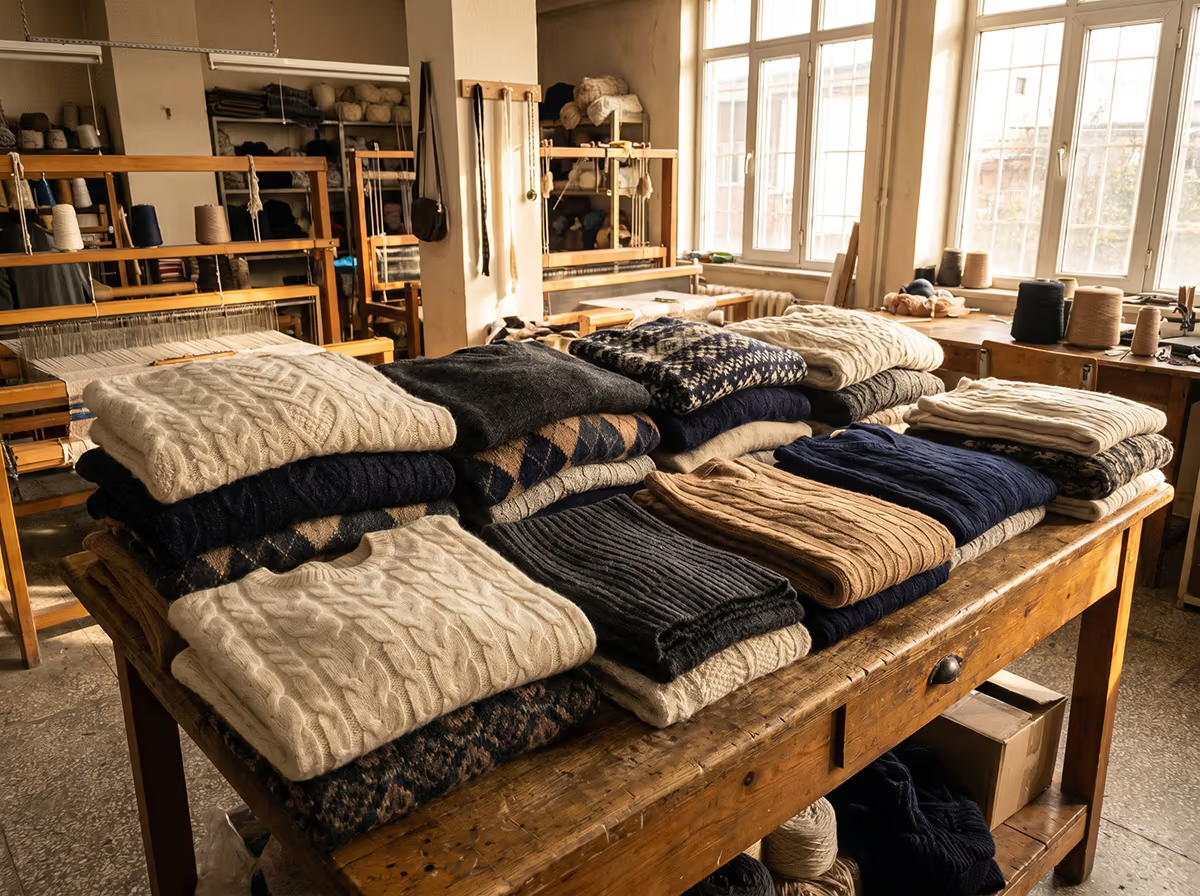
Our minimum is 250 pieces per colorway. That's small enough to test a new style without committing to a full season's inventory — the DTC test-and-learn cycle becomes viable without buying 1,000 units blind.
DTC brands typically sit at a quality price point where a bad batch is a reputation problem, not just a refund. EU-calibrated Turkish factories maintain consistent QC across small and medium runs — the same garment quality from batch 1 to batch 4.
Working directly with an OEM factory (no intermediary agent) means tighter communication on fit adjustments, colorway changes and trim decisions. DTC brands that own their design and story often prefer this direct relationship to the black-box agent model.
DTC customers ask questions. The UFLPA compliance story — documented non-Xinjiang cotton/fiber supply chain — is easier to tell from a Turkish factory than from many Chinese suppliers. That's a real marketing asset for values-driven DTC brands.
Being honest: if you're selling commodity-priced basics — plain crew necks at a $35 retail price point — Turkey will not be cost-competitive with high-volume Chinese production. The math doesn't work at that price level and any factory that tells you otherwise is misleading you. Similarly, if you need 5,000+ units of a simple style with no design complexity, China's volume infrastructure wins on unit cost. Turkey makes sense when the product justifies a higher CMT — premium materials, complex construction, compliance-sensitive supply chain.
A realistic Turkey-to-US timeline from approved sample to bulk delivery is 10–14 weeks: 4–6 weeks production + 2 weeks sea freight (Mersin to US East Coast) + customs clearance buffer. For a DTC brand running a 6–8 week sell-through cycle, that means reorder decisions need to be made before the first batch sells out. Plan for that inventory bridge; don't assume you can reorder reactively. Air freight is possible for urgent replenishment but changes the landed cost calculation significantly.
Manufacturing Service
Factory-direct DTC production — your brand, full margin control, no wholesale intermediary.
See DTC service →Tell us your style, MOQ target and price point. We'll give you an honest read on whether it's a good fit before we start sampling.