The sampling process in knitwear manufacturing is not just a quality gate — it's a communication process between your design intent and the factory's production capability. Every revision at the sample stage is cheaper and faster to fix than a correction during bulk production. Understanding what each sample type means, what to evaluate at each stage, and when to push back versus when to approve, is one of the most practical skills a sourcing manager or brand founder can develop.

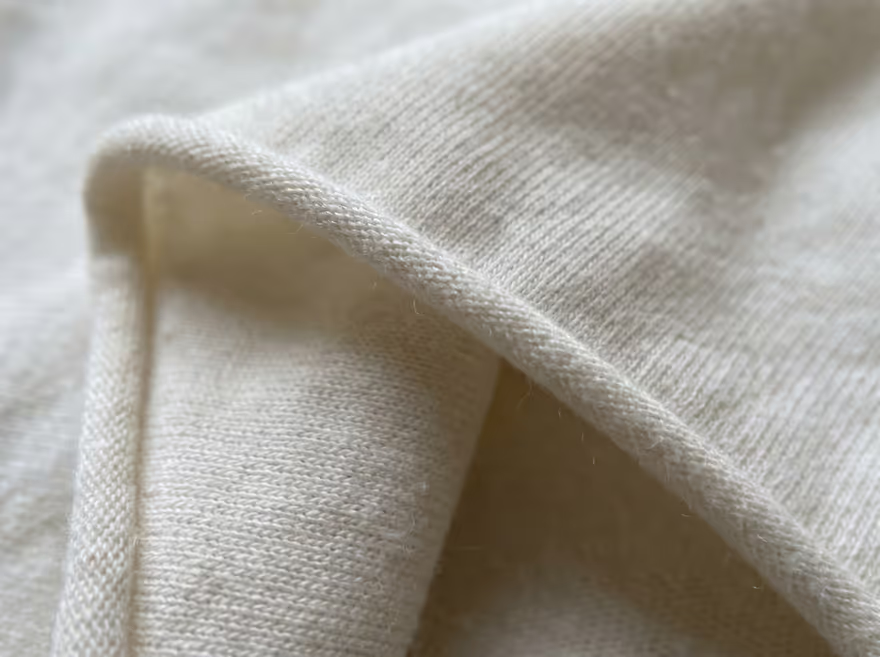
Knitwear quality control — hem and finishing detail, Kiwi Giyim
Hem finishing QC: seam allowance, fold consistency, and label placement checked per unit

The Four Sample Stages

01

Proto Sample

The factory's first physical interpretation of your tech pack. Usually produced in one color (often the easiest available, not necessarily your production color), sometimes without your label. The proto tests whether the factory understood the construction, gauge, stitch pattern and silhouette correctly. Expect it not to be perfect — that's normal. What matters is whether it's directionally right and what corrections you need to specify.

02

Salesman Sample (SMS)

Produced after proto approval (or after one revision round). The SMS is typically in your production colors, with your label, to final spec. This is the sample you use for sales presentations, line sheets and buyer meetings. It should represent what bulk will look like. Approval of the SMS is the signal to move to production.

03

Pre-Production Sample (PP)

Produced at the start of bulk production in the production yarn lot and color, using the exact machinery and settings that will run the bulk order. The PP confirms that the production setup matches the approved SMS before the full run begins. Small deviations at the PP stage are caught here, not when 500 garments are already cut.

04

Top of Production (TOP)

A sample pulled from the first completed bulk garments — not from a separate sample run. The TOP is compared against the approved SMS to confirm that bulk quality matches the standard. If the TOP matches, production ships. If it deviates significantly, the factory investigates before the full bulk leaves.

What to Evaluate at Each Stage

At the Proto stage, focus on construction and silhouette rather than perfection of details. Ask yourself: Is the gauge correct? Is the stitch pattern correct? Does the silhouette match the sketch? Are the measurements directionally right? Don't reject a proto because the color isn't final or the label is wrong — those are expected proto conditions. Do push back if the construction is fundamentally different from the spec.

At the SMS stage, you're evaluating everything: construction, measurements, yarn quality, handle (hand feel), color accuracy against your reference, label placement, finishing quality, seaming and any trim. This sample will be photographed and shown to buyers. It needs to be right. Document every specification that's been approved — take photos, note measurements — because the SMS becomes the production standard.

At the PP stage, compare carefully against the approved SMS, particularly on color (production yarn dye lots can vary slightly from sample yarn), measurements (check all points in your spec), and handle. Minor variations are normal; significant deviations are not.

At the TOP stage, you're doing a final comparison. Pull two or three garments, not just one — production samples can vary slightly across a run. Confirm labeling, packing and carton marking are also correct before approving shipment.
Realistic Timelines for Flat-Knit Sampling

Flat-knit sampling takes longer than cut-and-sew because each sample requires machine programming and knitting — you can't just cut a new pattern from existing fabric. Here are realistic timelines for flat-knit specifically:

Total from tech pack to SMS approval: Plan for 7–10 weeks. This is the minimum realistic timeline for a new style with a new factory; an existing style with an established factory can be faster.

Common Sampling Mistakes to Avoid

The most common issues we see from new brand clients: approving a proto with measurement discrepancies "we'll fix in bulk" (they rarely get fixed automatically in bulk); providing an incomplete tech pack and expecting the factory to fill in the gaps correctly (they won't always); and not documenting the approval with photos and a written correction list (which means both parties have different ideas of what was agreed). A written comment sheet with every proto — clear, itemized — creates shared records that protect both the brand and the factory if there's a dispute later.

OEM Manufacturing

Kiwi Giyim — OEM Knitwear Manufacturer

Proto to pre-production approval — we walk every US brand through each stage.

See OEM services →

Ready to Start the Sampling Process?

Send us your tech pack. We'll review it, flag any spec gaps, and give you a proto timeline and sampling cost within one business day. No commitment required to get a quote.

Related Guides

→ Knitwear Cost Breakdown: CMT, FOB and Full Package Pricing for US Brands → Fall/Winter Knitwear Production Calendar: Planning from Turkey → Holiday Sweater Sourcing Timeline: Q4 Planning Guide for US Brands
WhatsApp