Pakistan is one of the world's largest textile exporters — cotton spinning, denim, jersey and home textiles at very high volume. Turkey is a deep flat-knit and sweater specialist. They're not really competing for the same product. Understanding the difference helps you route the right styles to the right source, rather than treating them as interchangeable low-cost alternatives.
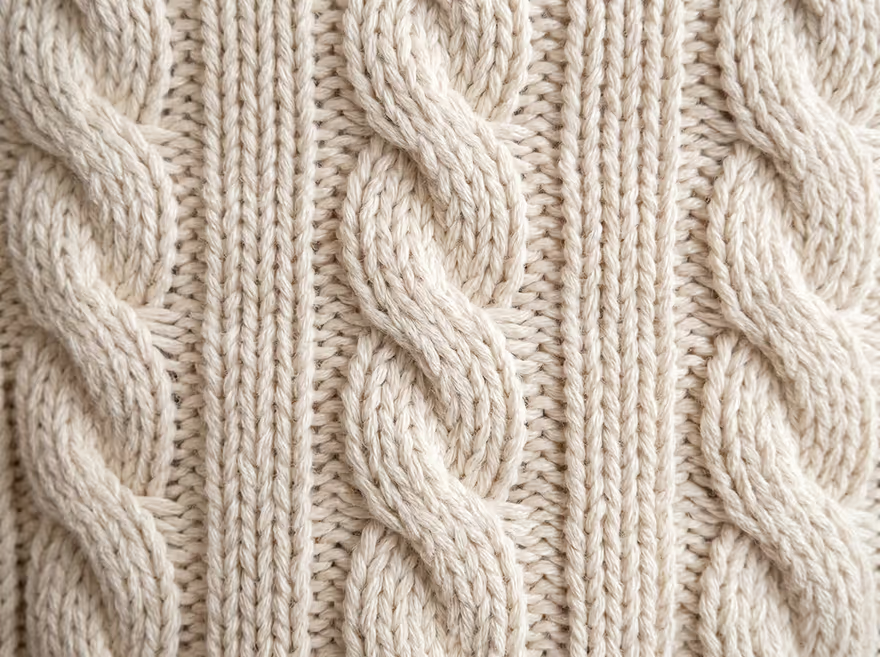
Cable-knit sweater manufacturing — Turkey vs Pakistan for US knitwear buyers
Cable-knit construction: a product category where flat-knit specialization matters

Side-by-Side: Key Factors

FactorPakistanTurkey
US import duty (knitwear)MFN rate — no preferential accessMFN rate — same
Core manufacturing strengthCotton jersey, denim, home textilesFlat-knit sweaters, WHOLEGARMENT
Flat-knit sweater depthLimited specialist capacityDeep (Shima Seiki, Stoll)
Cotton basics unit costLowerHigher
Fine-gauge / merino / cashmereLimitedAvailable
WHOLEGARMENTRareYes
MOQ flat-knit sweater500–2,000+ pcs250 pcs
Ocean to US East Coast~21–28 days (Karachi–Port Said–Atlantic)~14 days
OEKO-TEX certified yarn availabilityAvailable but less commonStandard

The Duty Question

Neither Pakistan nor Turkey has a free trade agreement with the United States. Both pay MFN tariff rates on knitwear exports to the US — typically 16–32 % on HTS Chapter 61 goods depending on fiber and construction. Pakistan lost its US GSP (Generalized System of Preferences) eligibility in 2012 and has not regained it. There is no duty advantage for Pakistani textiles entering the US. The two countries are on equal footing tariff-wise.

Where Pakistan Has Genuine Strengths

01

High-volume cotton jersey and cut-sew

Pakistan's Faisalabad and Karachi clusters are world-class for cotton spinning and jersey cut-sew. T-shirts, hoodies, sweatshirts and similar basics at high volume can be very competitively priced from Pakistan — especially for brands already managing a relationship with a vertically integrated mill.

02

Vertical integration in cotton

Pakistan grows cotton domestically and has deep spinning-to-garment integration for cotton products. For cotton-heavy programs, this vertical structure can reduce lead time and give more traceability in the cotton supply chain — which matters for brands navigating US forced labor compliance frameworks.

03

Cost on commodity basics

For standard cotton sweater-knit fleece, French terry, and basic interlock, Pakistan's unit cost can undercut Turkey on a like-for-like basis. If your product is a commodity basic at high volume with no premium positioning, Pakistan deserves a quote.

Where Turkey Has Genuine Strengths

01

Flat-knit construction — the critical difference

Pakistan's garment sector is built on woven and jersey cut-sew. Flat-knit sweater manufacturing — the kind that uses Shima Seiki or Stoll CMS machines to knit shaped panels or WHOLEGARMENT pieces — is a niche within Pakistan's industry. Turkey's Gaziantep and Aegean clusters are purpose-built for it. If your product is a constructed sweater (not a jersey fleece hoody), Turkey is the more capable source.

02

Fine yarns and blends

Merino, cashmere-blend, alpaca, mohair — these fibers require specialized machinery and yarn sourcing that Turkey has and Pakistan has less of. For a brand positioning above the mass market, the yarn quality and construction depth Turkey offers is hard to replicate from Pakistan at comparable scale.

03

Lower MOQ and faster East Coast transit

A 250 MOQ per style and ~14-day ocean transit to Savannah or NY/NJ are practical advantages for brands doing smaller collections or seasonal drops. Pakistan factories capable of quality flat-knit sweaters typically require larger minimum commitments and run ~21–28 days to East Coast ports.

The Honest Bottom Line

Pakistan is a strong source for cotton jersey basics at volume. Turkey is a strong source for flat-knit sweaters, fine yarns, WHOLEGARMENT and smaller collections. They don't compete for exactly the same product category — and for many US brands, the smarter move is to use both: Pakistan (or another low-cost jersey source) for basics, and Turkey for the constructed sweater program.

If someone is pitching you Pakistan as a flat-knit sweater specialist or promising WHOLEGARMENT production at competitive Pakistan prices, that's worth scrutinizing carefully before committing.

Sourcing Comparison

Turkey vs China — Full Comparison

See how Turkey's flat-knit strengths compare across all knitwear sourcing alternatives.

See full comparison →

Sourcing flat-knit sweaters for your US brand?

Send us your styles. We'll quote realistically and tell you honestly if Turkey is the right fit for your program.

Related Guides

→ Vietnam vs Turkey Knitwear Manufacturing → Bangladesh vs Turkey Sweater Manufacturing → India vs Turkey Knitwear OEM
WhatsApp