Cotton knitwear has two very different manufacturing paths, and they produce very different products. Jersey cotton — cut-and-sewn from roll fabric — is the T-shirt and sweatshirt world. Flat-knit cotton is what we do: fully-fashioned panels knitted to shape on flatbed machines, with a structure, weight and hand that jersey cannot replicate. Flat-knit cotton sweaters have a denser construction, visible stitch architecture and a weight that reads as considered — not like a jersey top that happens to be styled as a sweater. For US brands building a spring/summer knitwear category or a year-round cotton basics line, flat-knit is the distinction that justifies the retail price and the product story.

Cotton Knitwear: What to Specify

01

Yarn Count and Twist

Cotton yarn for flat-knit is specified by count (Nm or Ne) and twist — higher twist produces a smoother, harder surface; lower twist gives a softer, more textured hand. Mercerized cotton has been chemically treated for luster and color depth — appropriate for cleaner, more polished styles. Gassed and combed cotton is finer and softer than standard carded; it knits at finer gauges. Specify the yarn finishing alongside fiber content.

02

Gauge for Cotton

Cotton behaves differently from wool at fine gauge — it has no natural elasticity, so stitches don't recover the same way. Fine-gauge cotton (12gg, 14gg) produces a lightweight, almost fabric-like hand suitable for spring/summer. 7gg–10gg produces a midweight cotton knit with visible stitch structure — suitable for transitional and year-round styles. 5gg chunky cotton can be used for textured, artisanal-looking pieces, though weight and shrinkage management require attention.

03

GOTS and OEKO-TEX

GOTS (Global Organic Textile Standard) certifies the entire supply chain from fiber to finished garment under organic and social criteria. GOTS-certified Aegean cotton yarn is available for brands that want an "organic cotton" label claim — but the certification must cover our production facility as well, so this requires advance planning and specification. OEKO-TEX Standard 100 certifies absence of harmful substances without organic fiber requirements — often a more practical starting point for cotton knitwear where the story is about quality rather than organic positioning.

04

Turkish Cotton Advantage

Turkey is one of the world's significant cotton-growing regions — Aegean cotton (grown in western Turkey) has a longer staple than many commodity cottons and is available in GOTS-certified form. This gives Turkish flat-knit manufacturers direct access to premium domestic cotton without import complexity, which is not an advantage available everywhere. For a brand that wants to make a Turkish-origin cotton claim authentically, it's a real story — not a marketing construct.
Spring/Summer Cotton Knitwear

The strongest commercial opportunity for flat-knit cotton in the US market is the spring/summer knitwear category — styles that bridge the gap between a jersey top and a winter sweater. Fine-gauge cotton in 12gg or 14gg, in structured silhouettes (fitted crew, cropped cardigan, relaxed polo), fills a white space that jersey cannot occupy with the same perceived value. US retail buyers are familiar with this category from European brands; the opportunity for a US brand is to develop it domestically with a manufacturer that understands fine-gauge cotton's specific construction requirements.

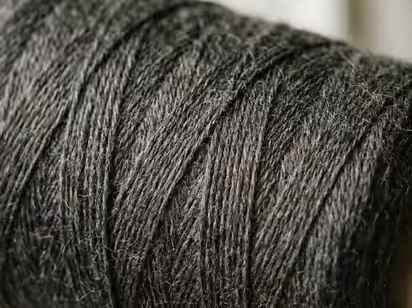
Premium knitwear yarn — certified supply chain, Kiwi Giyim Turkey
Premium yarn cones sourced from OEKO-TEX certified Turkish and Italian spinners

Shrinkage and Aftercare Specs

Cotton shrinks. For flat-knit cotton, this is a specification issue that must be resolved in development, not discovered in QC. We pre-shrink yarn before knitting and apply garment washing protocols to stabilize dimensions — but the brand's care label must reflect the realistic aftercare requirement. Cotton knitwear that a consumer puts in a hot dryer will shrink; the care label should say machine cold, reshape and lay flat. This is a consumer expectation management issue as much as a manufacturing one, and getting the aftercare spec right in development avoids returns and complaints after the sell-through.

Building a cotton knitwear category?

Share your silhouette direction, target gauge and certification needs. We'll advise on yarn options, construction and seasonal timing and provide a transparent quote.

Related Guides

→ Cable Knit Sweater Manufacturing for US Brands → Chunky Knit Sweater Manufacturing for US Brands → Cardigan Manufacturing for US Private Label Brands
WhatsApp