Cardigans are a category where the details matter more than almost any other knitwear product. The gauge determines weight, drape and suitability for the season. The construction method (full-fashioned vs cut-and-sew vs WHOLEGARMENT) affects quality perception, waste and manufacturing cost. The yarn choice determines handle, care requirements and positioning. This guide is for US brands evaluating or planning a cardigan program — what's possible, what it costs and where Turkey fits in the supply chain picture.

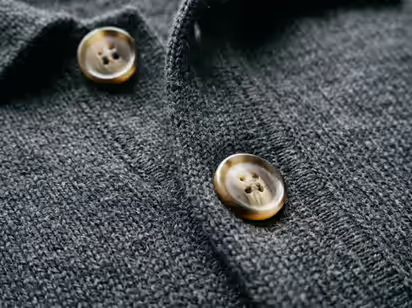
Knitwear button placket detail — cardigan finishing, Kiwi Giyim Turkey
Button placket finishing: clean edge linking and buttonhole stability

Gauge Guide: From Chunky to Fine

3gg

Coarse / Chunky

Very chunky texture, thick yarn, bold stitch visibility. Associated with hand-knit look, oversized silhouettes, cozy positioning. Popular in fall/winter. Common yarns: acrylic, chunky wool blends, recycled materials. Lower cost per unit (less knitting time per area vs fine gauge) but higher yarn weight per garment. Works well in trendy oversized cardigans and bucket-hat adjacent styling.

5–7gg

Mid-Weight

The most versatile range for cardigans. 5gg gives a classic "fisherman knit" or cable weight; 7gg moves toward a lighter but still substantial drape. Merino, cashmere blends, cotton-acrylic blends all work well. This gauge range covers most of the bestselling US market cardigans: longline styles, shacket-weight open-front cardigans, structured button-fronts. The sweet spot for quality-to-cost ratio.

10–12gg

Fine Gauge

Lighter, finer fabric with a more refined, tailored appearance. 10gg is the entry to the fine-gauge category — common in transitional-weight cardigans and layering pieces. 12gg produces a very fine, almost fabric-like surface that wears like a luxury knit. Fine gauge typically uses finer merino (2/28Nm–2/48Nm) or cashmere blends. Higher unit cost due to longer knitting time per garment but positioned at premium retail prices.

Mixed

Textured / Stitch Detail

Cardigans with cable panels, tuck stitches, ribbed yokes or mixed-gauge constructions don't sit cleanly in one gauge category. These require additional machine programming and more complex production setup. The result — a defined, textural garment — justifies the additional cost at mid-to-premium price points. This is where flat-knit shines versus cut-and-sew knitwear.

Construction Methods: What They Mean for Quality and Cost

Full-fashioned: The panels of the cardigan (front, back, sleeves) are knitted to shape — the edges are narrowed and widened by dropping or adding stitches as the knitting progresses. No cutting required; the panels arrive from the machine already shaped. Full-fashioning produces a cleaner seam, less waste and a quality signal visible in the "fashion marks" (the shaped edge row) at seams. Standard for mid-to-premium cardigans.

Cut-and-sew: Fabric is knitted as a tube or flat panel and then cut to shape and sewn. Faster and cheaper to produce, but generates more yarn waste and the cut edge must be secured. Common for lower-price cardigans and high-volume production where per-unit cost optimization is the priority. Acceptable quality for the right price point, but not the quality signal of full-fashioning.

WHOLEGARMENT (seamless): The entire cardigan — including sleeves and body — is knitted in one piece on a Shima Seiki WHOLEGARMENT machine with no seaming required. Produces a seamless, 3D garment with exceptional comfort and no seam stress points. Highest-end construction; garment waste near zero. Per-unit cost is higher due to machine programming complexity and longer knitting time, but yield rate and labor costs offset some of this. Increasingly popular for premium DTC and boutique wholesale cardigans.
Popular US Market Cardigan Styles

The styles with strongest demand from US brands we work with:

MOQ and Production Planning for Cardigans

Our minimum is 250 pieces per style-color, regardless of gauge or construction. For a cardigan program with multiple styles, a realistic first-season plan looks like: 2–3 styles × 1–2 colors each = 500–1,500 pieces. This is enough to test the market and support a DTC capsule launch or boutique wholesale program without overcommitting inventory. WHOLEGARMENT cardigans can run at the same 250-piece minimum — the higher per-unit cost is in the yarn and machine time, not in requiring a larger run. Plan sample lead time (4–6 weeks for a WHOLEGARMENT proto) into your development calendar — WHOLEGARMENT programming is more complex than standard flat-knit and takes more setup time.

Planning a Cardigan Program?

Send us a sketch, reference images or a tech pack with your target gauge and construction type. We'll come back with a costing, yarn suggestions and a development timeline within one business day.

Related Guides

→ Cable Knit Sweater Manufacturing for US Brands → Chunky Knit Sweater Manufacturing for US Brands → Private Label Crewneck Sweater Manufacturing for US Brands
WhatsApp