Every knitwear shipment entering the United States needs a Harmonized Tariff Schedule (HTS) number. That 10-digit code tells CBP what the product is, what duty rate applies, and whether any additional tariffs (Section 301, antidumping) are triggered. For sweaters and knitwear, the relevant universe is Chapter 61 of the HTSUS — "Knitted or crocheted clothing and clothing accessories." The classification isn't always obvious, and an error can mean an unexpected duty bill, a CF-28 request for information, or a re-liquidation months after entry.

This guide covers how Chapter 61 is organized, the key subheadings for sweaters, how fiber content drives classification, and where to look up the accurate code. Disclaimer: HTS classification is a legal determination. Always confirm your classification with a licensed customs broker or trade attorney before importing.
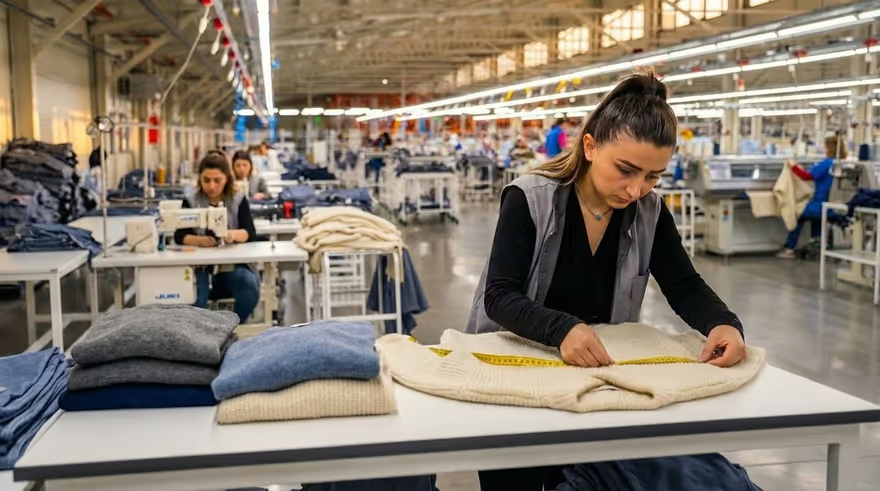
Knitwear export documentation — Turkey to USA, Kiwi Giyim
Packing and export documentation: commercial invoice, packing list, and certificate of origin prepared for US import

How Chapter 61 Is Organized

Chapter 61 covers garments that are knitted or crocheted — distinguished from woven (Chapter 62) by construction, not appearance. Within Chapter 61, products are split first by garment type, then by fiber content. For sweaters and pullover-type knitwear, the main heading is 6110.

6110

Sweaters, Pullovers, Sweatshirts, Waistcoats

The primary heading for most sweater styles. Subdivided by fiber: wool (6110.11–6110.19), cotton (6110.20), MMF — synthetic/artificial (6110.30), other (6110.90).

6111

Babies' Garments and Accessories

Knitted garments for infants up to 86 cm. Fiber-split structure mirrors 6110. If your knitwear includes a baby/toddler range, classification shifts here.

6114

Other Garments, Knitted or Crocheted

Catch-all for garments that don't fit 6101–6113 (e.g., certain coverups, specialty knitwear). Worth checking if your style is unusual.

6117 / 6117.80

Accessories: Scarves, Gloves, Hats

Knitwear accessories — beanies, scarves, gloves — are classified here, not in 6110. A "sweater set" with a matching hat may split across headings.

The Fiber Split: Why Content Drives Classification

Within heading 6110, the subheading depends on the chief weight of the yarn — the fiber that makes up more than 50% by weight. A sweater knitted from a 55% cotton / 45% acrylic blend classifies under 6110.20 (cotton), while a 60% acrylic / 40% cotton blend goes to 6110.30 (man-made fiber). The duty rates differ. Common rates for Turkish-origin knitwear (General — Column 1) are approximately:

6110.11–19

Wool Sweaters

General duty rate typically around 16% ad valorem. Wool knitwear carries some of the higher rates in Chapter 61.

6110.20

Cotton Sweaters

General duty rate typically around 16.5% ad valorem. Cotton is the most common fiber in Turkish flat-knit production.

6110.30

Man-Made Fiber (MMF) Sweaters

Synthetic (polyester, acrylic) or artificial (viscose, modal) chief-weight items. Rate typically around 32% ad valorem — significantly higher, which affects landed cost planning.

6110.90

Other Fiber Sweaters

Linen, silk, bamboo, or exotic fiber chief-weight. Rate varies. If you're sourcing fine-gauge linen-blend knitwear, verify this subheading carefully.

Important: These are general (MFN) rates for Turkish-origin goods under normal trade conditions. Additional tariffs (such as Section 301 for China-origin goods) do not apply to Turkey-origin knitwear, but always verify current rates in the official HTSUS before importing.

How to Look Up Your HTS Code

1

Use the USITC HTS search tool

The US International Trade Commission publishes the current HTSUS at hts.usitc.gov. Search by keyword ("sweater", "pullover") or browse Chapter 61 directly. The site shows general rates, special rates, and additional duties column by column.

2

Determine chief-weight fiber

Get the full fiber content breakdown (by weight) from your manufacturer. The chief-weight fiber drives the 4-digit subheading. If two fibers are exactly equal, specific rules apply — ask your broker.

3

Consider knit construction

CBP classifies by construction (knitted vs woven) confirmed at the garment level. Flat-knit WHOLEGARMENT pieces are knitted garments — they belong in Chapter 61, not Chapter 62.

4

Request a binding ruling if in doubt

CBP's CROSS Rulings Database (rulings.cbp.gov) holds thousands of published rulings you can search. For novel or high-value items, consider requesting a prospective binding ruling from CBP — it locks in the classification before the shipment arrives.

5

Engage a licensed customs broker

Especially for your first shipment or a new product line. A broker classifies daily and spots edge cases — the cost is modest relative to a mis-classification penalty or an unexpected duty bill at 32% vs 16%.

What Your Turkish Manufacturer Should Provide

A good factory makes classification easier. Before your shipment sails, ask your manufacturer to provide a fiber content certificate showing the weight percentage of each fiber in each style, a country of origin declaration on the commercial invoice, and — if relevant — a yarn supplier certificate that supports UFLPA compliance documentation. At Kiwi Giyim, we provide these as standard with every order.

Frequently Asked Questions

What HTS code do sweaters fall under for US imports?

Most sweaters, pullovers and similar knitwear are classified under HTS heading 6110 in Chapter 61 (Knitted or crocheted clothing). The subheading depends on fiber content: 6110.11–19 for wool, 6110.20 for cotton, 6110.30 for man-made fiber (synthetic/artificial), 6110.90 for other fibers such as linen or silk.

How is the HTS subheading determined for a blended fiber sweater?

By the chief-weight fiber — the fiber making up more than 50% of the yarn by weight. A 55% cotton / 45% acrylic sweater classifies under 6110.20 (cotton). A 60% acrylic / 40% cotton sweater classifies under 6110.30 (man-made fiber), which carries a significantly higher duty rate. Always confirm with a licensed customs broker.

What duty rate do Turkish-origin sweaters pay entering the US?

Typical MFN (Column 1 General) rates for Turkish-origin knitwear: approximately 16% for wool sweaters (6110.11–19), 16.5% for cotton (6110.20), and around 32% for man-made fiber sweaters (6110.30). Section 301 surcharges apply only to Chinese-origin goods, not Turkey. Always verify current rates with a licensed customs broker before importing.

Do man-made fiber sweaters have a higher duty rate than cotton sweaters?

Yes. Under HTS 6110.30, synthetic and artificial fiber sweaters (acrylic, polyester, viscose chief-weight) typically face around 32% duty — approximately double the rate for cotton sweaters under 6110.20. This is a significant factor in landed cost planning for acrylic-blend styles from any origin.

Where can I look up the correct HTS code for my sweaters?

The USITC publishes the current HTSUS at hts.usitc.gov — search by keyword or browse Chapter 61. For published rulings, check CBP's CROSS database at rulings.cbp.gov. For novel classifications or high-value shipments, engage a licensed customs broker or request a prospective binding ruling from CBP before the shipment sails.

Compliance Resource

US Sweater Import Compliance Guide

Full import compliance guide covering HTS codes, UFLPA, FTC labeling and more.

See compliance guide →

Ready to Import Knitwear from Turkey?

We'll provide the fiber content documentation your broker needs to classify your knitwear correctly. Send us your tech pack and let's discuss your order.

Related Guides

→ Section 301 & Your Sweater Costs → US Import Duty on Turkish Knitwear → The True Landed Cost of a Sweater
WhatsApp