There's a meaningful difference between sourcing knitwear for your own DTC brand, sourcing for resale into US retail accounts, and being a wholesale supplier who handles distribution. These three models have different factory requirements, compliance demands and operational responsibilities. Clarity on which model you're running determines which type of supplier you actually need.

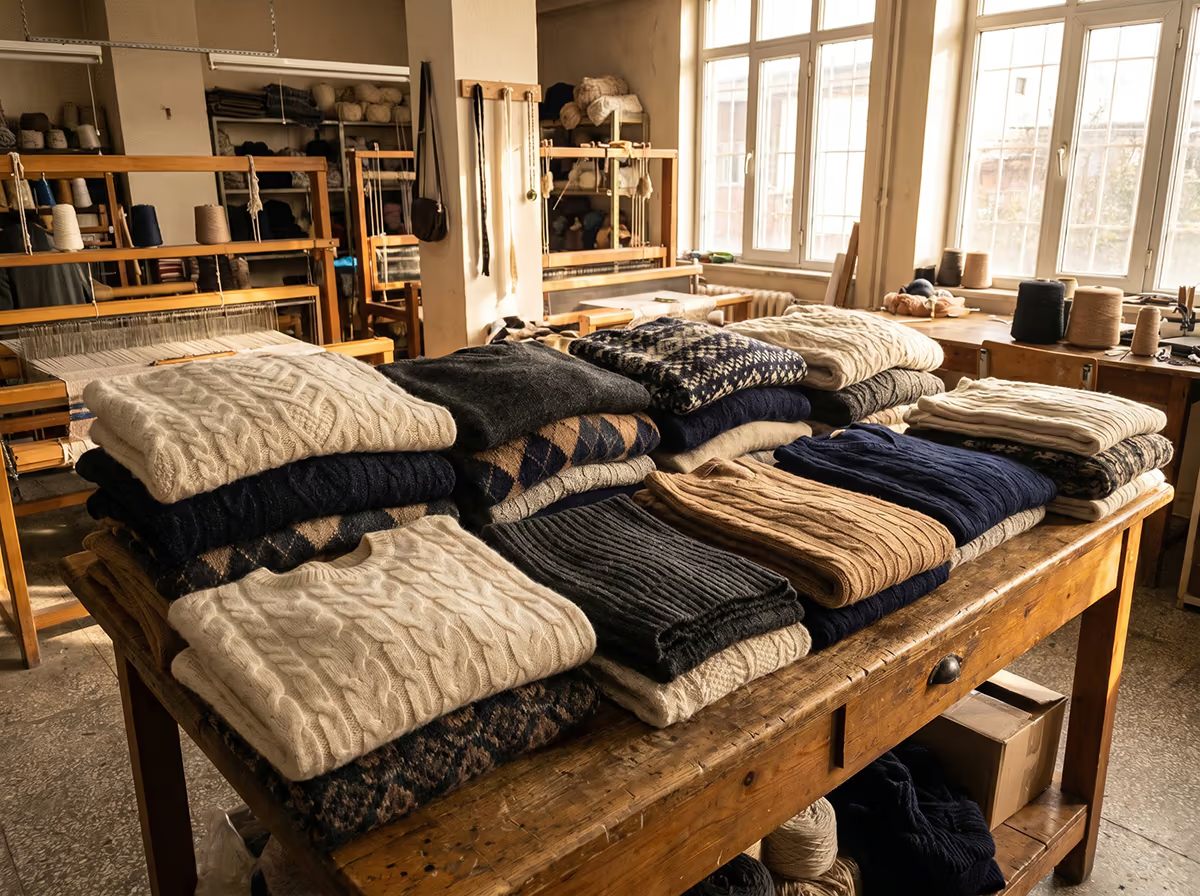
Private label knitwear samples — Kiwi Giyim OEM portfolio
OEM knitwear portfolio: private label programs from 250 units, custom construction and colourway

What US Retail Buyers Require From Suppliers

01

Vendor Guide Compliance

Major US retailers (department stores, specialty chains) have detailed Vendor Guides that specify packaging, labeling, ticketing, shipping documentation and compliance requirements. A supplier selling into Nordstrom, Bloomingdale's or a specialty chain must meet their specific Vendor Guide — not a general industry standard. These requirements are retailer-specific and change over time.

02

GTINs and UPC Barcodes

Every style, color and size combination entering retail needs a GTIN (Global Trade Item Number) expressed as a UPC barcode on the hangtag or label. GTINs are registered through GS1 by the brand — not by the factory. The factory attaches the barcodes the brand provides; the brand manages GTIN registration and accuracy.

03

EDI Capability

Electronic Data Interchange (EDI) — the system through which retailers send purchase orders and suppliers return invoices and shipping confirmation — is required by many retail accounts. EDI is managed at the brand/supplier level, not by the OEM factory. An importer-distributor or 3PL with EDI capability sits between the factory and the retail account in a typical wholesale supply chain.

04

Pack Specifications

Retail buyers specify how garments are packed: individual poly bags, specific folding method, inner pack quantities, master carton labeling, weight limits. These specs are enforced at receiving — non-compliance results in chargebacks. The OEM factory can execute pack specs when they're provided clearly and in advance; the brand/importer is responsible for communicating them.

What an OEM Factory Provides vs What the Brand Manages

The OEM factory provides: production to spec (garment quality, measurements, construction), internal QC, packing to the brand's pack spec, commercial invoice and packing list documentation, country of origin labeling, compliance test reports (REACH, fiber content accuracy). The brand manages: GTIN registration, Vendor Guide compliance and retailer relationship, EDI, import customs and duties, warehouse/3PL, chargebacks with the retailer. We are an OEM production factory, not a turnkey wholesale distributor. We produce your product; you handle the import, distribution and retail compliance layer. If you need a turnkey solution including import and wholesale distribution, that requires a different service model than a direct factory relationship.
The Model That Works Well

The sourcing model that works well with a direct OEM factory relationship: a brand that has an importer of record (or handles customs themselves), manages their own retailer relationships and vendor compliance, and uses the factory relationship for production quality and consistency. The factory-to-retailer direct model — where the factory handles everything through to the retailer's dock — is not what we offer. That distinction matters before either party invests in sampling.

Clear on the supply chain model?

If you're managing the import and retail compliance layer and need a reliable OEM production partner, we're the right conversation.

Related Guides

→ Private Label Sweater Manufacturing for US Brands → DTC Knitwear Brand Manufacturing in Turkey → Knitwear Manufacturing for US Fashion Startups: What's Actually Possible
WhatsApp