Alpaca has been growing as a retail fiber story in the US for a reason: it's genuinely soft, significantly warmer than wool by weight, naturally hypoallergenic (no lanolin), and comes with a provenance narrative — Andean herders, Peruvian highlands — that resonates with a consumer looking for something beyond generic merino. Like cashmere, alpaca fiber is not produced in Turkey; it is imported as yarn (primarily from Peru via European spinners) and knitted in Gaziantep on flat-knit machinery. The value Turkey adds is the same: skilled construction, EU-calibrated quality, and access to fine-gauge flat-knit technology.

Premium knitwear yarn — certified supply chain, Kiwi Giyim Turkey
Premium yarn cones sourced from OEKO-TEX certified Turkish and Italian spinners

Alpaca Fiber Types: What Each Grade Means in Practice

01

Baby Alpaca (Under 22 Micron)

The first shearing of a young alpaca, or the finest fiber sorted from an adult clip — typically 18–22 micron. Noticeably softer than standard alpaca, comparable to fine merino in next-to-skin comfort. This is the grade that justifies premium retail ($180–$300+) and the one US brands typically mean when they say "alpaca sweater." Huacaya type (crimped, denser) is more common; suri type (silkier, longer staple) is available at a premium.

02

Suri Alpaca

Suri fiber has a long, silky staple with natural luster — it drapes differently from huacaya, more like a wool-silk blend. It produces a smooth, shiny surface rather than the slight halo of huacaya alpaca. Less common and slightly more expensive. Suited to drapey silhouettes (longline cardigans, wide-leg adjacent knitwear) where the surface shine is an asset. Knits differently than huacaya — tension and stitch structure need to account for its lower crimp.

03

Standard Alpaca (22–26 Micron)

Adult alpaca fiber from mature animals — slightly coarser than baby alpaca, more affordable, and appropriate for midweight structures at mid-market retail ($80–$160). Can be itchy at the neck for sensitive wearers — design should account for this with rib detailing or collar treatment. Often blended with merino to improve softness and reduce cost while maintaining the alpaca character.

04

Alpaca-Merino Blend

Combining alpaca (typically 50–70%) with extra-fine merino produces a yarn that's softer than standard alpaca, more durable than pure alpaca (alpaca can be fragile at fine gauge), and more cost-accessible than pure baby alpaca. The merino adds crimp and elasticity — improving shape retention and recovery, which alpaca alone lacks. This is the most practical starting point for brands new to alpaca sourcing.
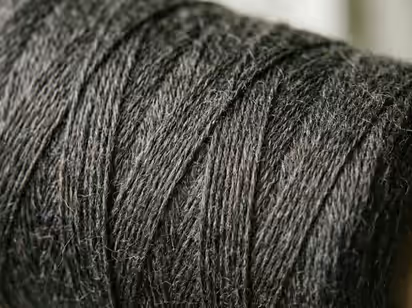
Halo vs Smooth Finish — and How Gauge Affects It

Huacaya alpaca has a natural tendency to produce a slight halo effect — a soft fuzz around the yarn that gives the garment a misty, cloud-like surface. Whether this is desirable depends on the aesthetic. For a rustic, artisanal or cozy-luxury positioning, halo reads well. For a clean, refined or technical look, it works against the brief. Gauge affects halo intensity: coarser gauges (5gg, 7gg) tend to amplify halo; finer gauges (12gg, 14gg) produce a smoother, denser surface where individual fibers have less room to migrate. Finishing (brushing or not brushing, garment washing intensity) also controls halo. Specify your intended surface finish in the tech pack — don't leave it to interpretation.

Turkey vs Peru: Honest Comparison for US Brands

Peru has its own well-developed alpaca knitwear industry — particularly for hand-knit and semi-industrial production. For a US brand considering sourcing options, the honest comparison is this: Peruvian manufacturers often specialize in alpaca and have deep fiber expertise, but production infrastructure, machine gauge range and capacity vary widely. Turkish flat-knit manufacturers offer consistent machine-knit quality across a broader gauge range, EU-compliant chemistry, and more predictable lead times for bulk orders. If you're building a hand-knit or artisanal story, Peru may be more appropriate. If you want consistent, machine-knit alpaca knitwear at a quality standard calibrated for contemporary US retail, Turkish flat-knit is a sound option.

Luxury Knitwear

Luxury Knitwear Manufacturing for US Brands

Alpaca, alpaca-wool blend and fine natural-fiber production for US premium brands.

See luxury knitwear →

Developing an alpaca knitwear line?

Share your design direction, target retail price and intended fiber grade. We'll advise on gauge, finish and alpaca-blend ratios and quote transparently.

Related Guides

→ Cable Knit Sweater Manufacturing for US Brands → Chunky Knit Sweater Manufacturing for US Brands → Cardigan Manufacturing for US Private Label Brands
WhatsApp