We get a lot of inquiries from boutique brands wanting 50 or 100 pieces. Here's an honest answer about what's actually possible — and what isn't — at the small batch level for flat-knit knitwear.
Small boutique and emerging brands face a genuine tension in knitwear sourcing: they need quality product that stands out from the wholesale market, but their order volumes are too small for most factories to prioritize, and their budgets don't support the unit cost of truly tiny runs. This guide is for those brands — not to tell you everything is easy, but to give you an accurate picture of what's achievable and where the real opportunities are.
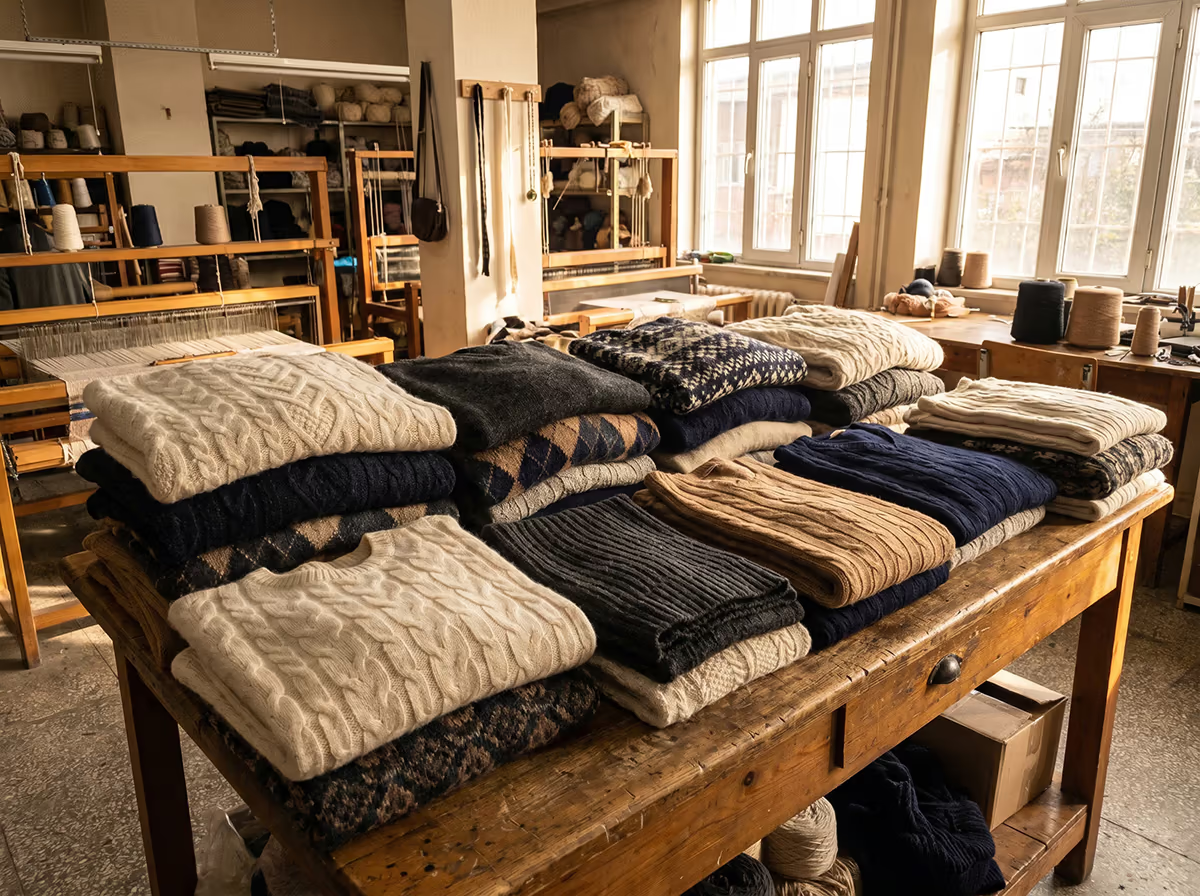
We are a factory with Shima Seiki WHOLEGARMENT and flat-knit machines. Our minimum is 250 pieces per style-color — one style, one color, 250 garments. This is the minimum at which production is commercially viable given the setup costs involved: machine programming, yarn sourcing minimums, quality inspection overhead and export documentation.
We won't pretend otherwise to win your inquiry: if your total order is under 250 pieces across all styles and colors, we're not the right factory for you at this stage. That's not a negotiating position — it's a real cost floor. Below 250 pieces per style-color, the per-unit cost becomes disproportionate even before adding the cost of sampling, freight and duties. The numbers don't work for either party.
250 pieces is a smaller minimum than many people assume. Here's what it looks like in practice for a boutique brand:
The key insight: a 250-piece minimum doesn't mean you need to order 1,000 units to access quality knitwear manufacturing. It means each individual style-color combination needs to hit 250 units. Keeping your range narrow and your colorway count low is how boutique brands make the math work.
Chinese flat-knit factories targeting export markets typically require 500–1,000 pieces per style-color for quality-focused flat-knit construction. A 250-piece minimum at a Turkish factory is genuinely lower than what most comparable Chinese factories will accept at the same quality tier.
14–18 day ocean freight from Mersin to US East Coast vs 28–35 days trans-Pacific from China. For a boutique with tighter cash flow and a narrower order window, the shorter freight lane reduces inventory holding time and the cost of capital tied up in transit.
At 250–500 unit runs, quality consistency is more important than at volume — a bad bulk lot has a larger percentage impact on a small collection than on a 5,000-unit run. Turkish flat-knit factories producing for European quality standards handle small-to-medium runs with the same QC rigor as large runs.
For boutique brands selling through specialty retailers, compliance documentation is increasingly requested. Turkish manufacturing with non-Xinjiang cotton and EU-grade documentation provides this cleanly, without the sourcing investigation that's sometimes needed for Chinese-origin goods.
If your order is genuinely under 250 pieces, an overseas flat-knit factory isn't the right fit right now. Here's where you can look instead:
The path forward: test your concept through one of these channels at small quantities, validate sell-through, then come back to us at 250 pieces when the volume supports it. We're not the right partner at 50 pieces; we're a strong partner at 250.
Manufacturing Service
Small-batch flat-knit from 250 pcs — no large MOQ, no middlemen, factory-direct pricing.
See boutique service →If you've validated your product and you're ready to work at 250 pieces per style-color, we'd love to talk. Send us a brief with your style concept, yarn preference and target price point — we'll be direct about whether it's a fit.