The crewneck is the volume center of US sweater retail. Here's how to specify one correctly — from neckline rib depth and drop shoulder placement to gauge and fiber — and what to expect at each step of the development process.
No sweater silhouette moves more volume in US retail than the crewneck. It's the foundational knitwear piece across every market segment — contemporary, DTC, boutique, menswear and women's — and it's also the piece where fit and construction decisions have the largest downstream impact on the product's success. Getting a crewneck right in development requires more specificity than brands sometimes expect; "just a classic crew" leaves far too many critical decisions to interpretation. This guide covers what you need to specify — and why.
Set-in sleeve, standard armhole, hem hits at natural waist. The proportions are defined and intentional — any deviation reads as a mistake. Specify shoulder seam placement, sleeve length from shoulder (not from center back), neckline rib depth (typically 2–3 cm folded) and armhole depth explicitly. This is the style where dimensional consistency across the size run is most visible; proto in a mid-size and measure carefully before approving bulk grading.
Oversize silhouettes require different construction decisions: drop shoulder point (measured from neck to where shoulder seam falls on the upper arm), body width relative to actual chest measurement, and sleeve length accounting for the dropped shoulder position. Specify the intended finished measurements, not the grade from a base size — boxy styles don't grade identically to fitted styles and the proportions can shift in unexpected ways if not specified independently per size.
Body length is the critical measurement — where the hem falls relative to the natural waist. Specify finished body length from high point shoulder (HPS) for all sizes, not as a grade from the standard length. Crop length creates a different visual relationship between sleeve length and body length; some brands adjust sleeve length proportionally for cropped styles. Bottom rib depth affects where the garment ends visually; a wider rib creates a different look than a narrow one at the same total body length.
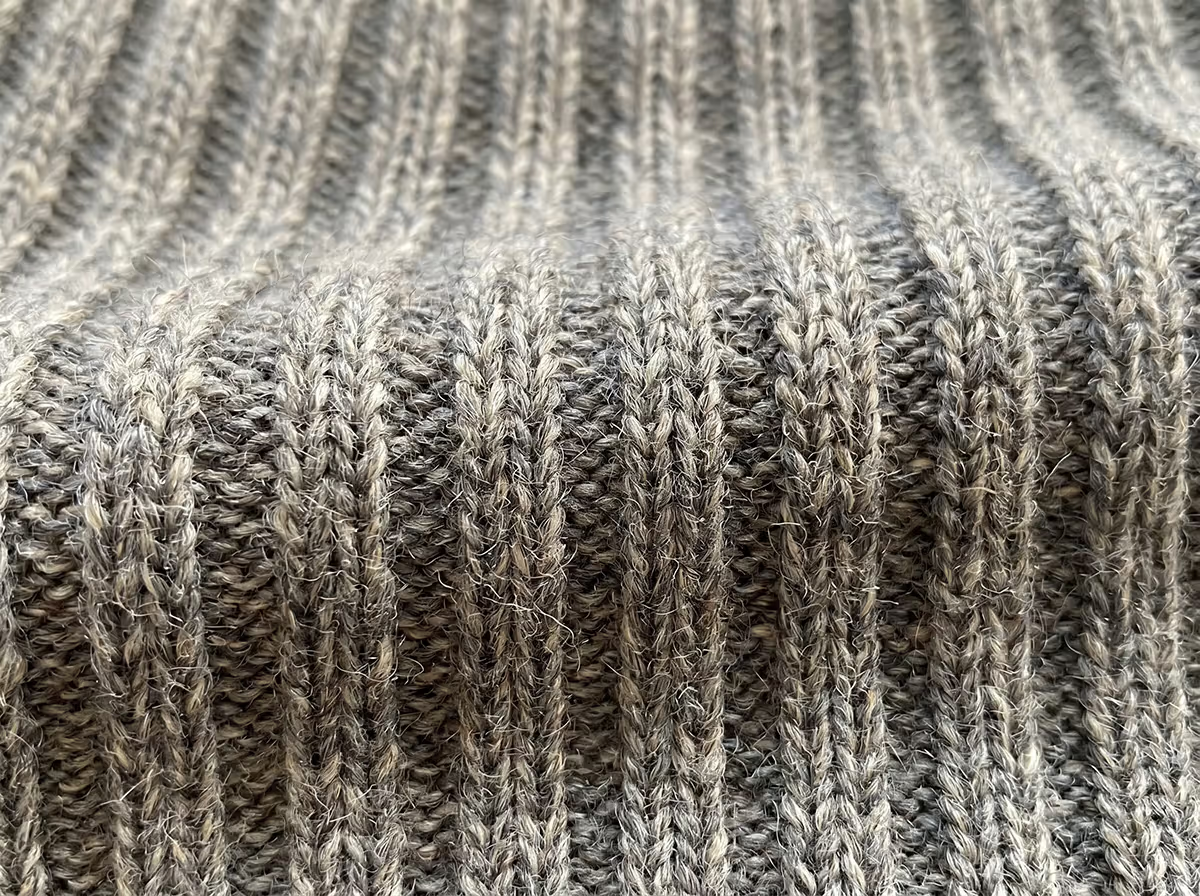
Fine-gauge crewnecks (12gg–14gg) in merino or cashmere read as elevated and suit contemporary positioning. The construction requirements are more demanding: finer gauge is less forgiving of tension variation, seaming requires a finer linking stitch, and finish quality is more visible. Chunky crewnecks (5gg–7gg) are faster to produce and suit cozy, textured aesthetics. The fiber weight and gauge affect everything downstream — proto turnaround, bulk production time, cost and the care label requirement.
US retail crewneck positioning by season is fairly consistent: Fall/Holiday — 7gg–10gg, lambswool, merino, cashmere, cashmere-merino; weights that read as cozy and seasonally appropriate. Spring/Summer — 12gg–14gg, fine merino, cotton, cotton-silk, linen blends; lightweight enough for transitional wear but with the structure that distinguishes flat-knit from jersey. Year-round basics — 10gg–12gg merino or lightweight wool-cotton blends; the sweet spot for brands building a small, considered permanent collection.
The development flow for a private label crewneck is: tech pack submission (include spec sheet, size chart, fabric/fiber brief, reference garment if available) → quote and development confirmation → proto production (typically 2–3 weeks) → proto review and fit corrections → pre-production sample (bulk fabric and construction) → bulk production. Plan 10–14 weeks from confirmed development to completed bulk, plus 14–18 days ocean freight to US East Coast. If your delivery date is fixed, work backward from it — not forward from when you start development.
Share your tech pack or spec sheet. We'll review the construction details, advise on gauge and fiber for your retail price point, and provide a development timeline and quote.