When a US brand says "I want to make sweaters," the first question is what manufacturing method they actually mean. Flat-knit, cut-and-sew and WHOLEGARMENT are three different construction approaches with different cost structures, minimum orders, design capabilities and quality outcomes. Getting clarity on this early determines whether you're talking to the right factory.

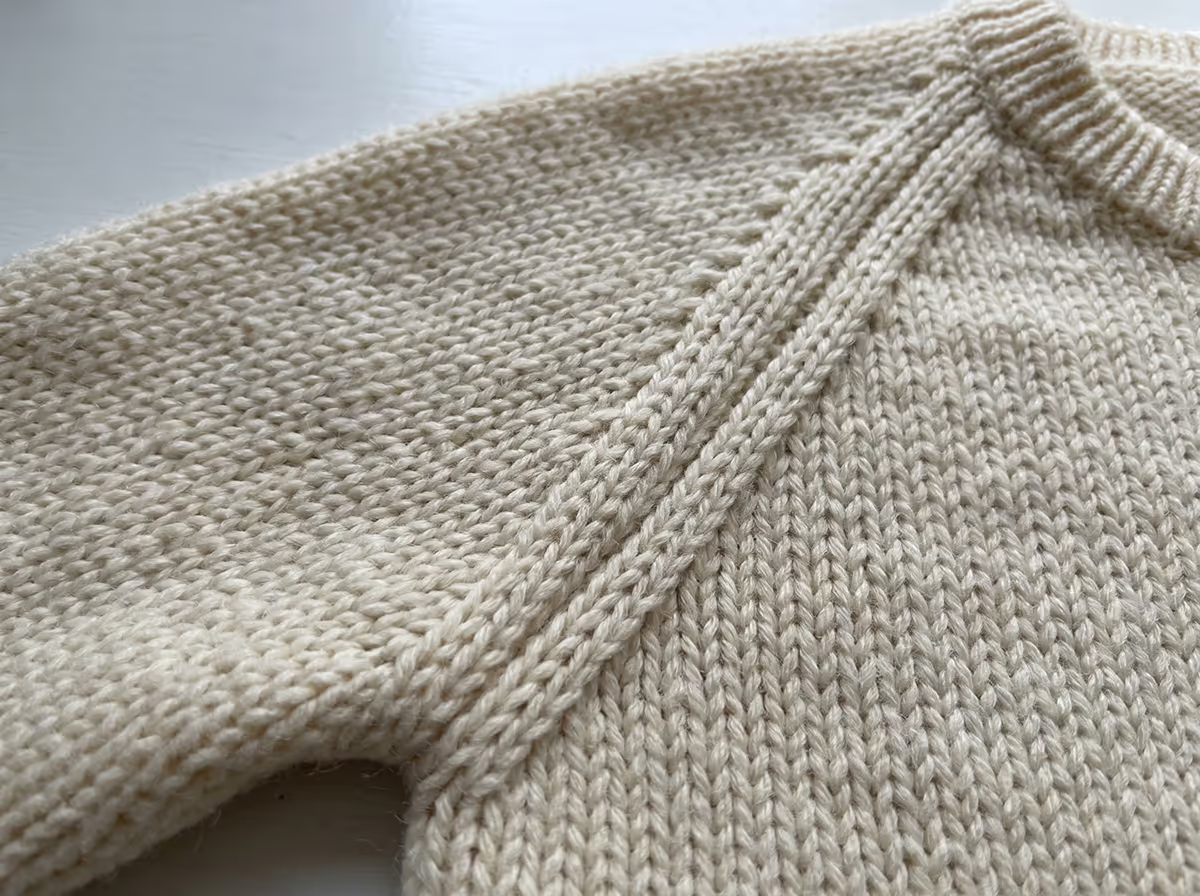
Fully-fashioned knitwear panel — shaped without cutting, Kiwi Giyim
Fully-fashioned shaping: armhole and neckline curves knitted in, zero cut waste

The Three Methods

01

Flat-Knit (Fully-Fashioned)

Individual panels (front, back, sleeves) are knitted on a flat-knit machine with shaping built in — stitches are increased or decreased on the machine to shape the armhole, neckline and sleeve head. Panels are then linked (seamed stitch-by-stitch) together. Result: a shaped, quality garment with a clean seam finish and minimal waste. Setup cost is higher (machine programming) but the quality outcome suits premium and contemporary price points.

02

Cut-and-Sew (Jersey Knit)

Knit fabric (circular-knit jersey) is produced in yardage, then cut into garment panels and sewn together — the same principle as woven fabric but in stretch knit. Faster setup, lower minimum quantities, more familiar to brands coming from jersey or woven backgrounds. Seams are overlock-sewn, not linked. The result is functional but shows more bulk at seams and lacks the shaped construction of flat-knit. Suited to lower price points and simpler silhouettes.

03

WHOLEGARMENT (Seamless 3D)

The entire garment is knitted in one piece on a Shima Seiki WHOLEGARMENT machine — no panels to link, no seams to sew. Comes off the machine complete. The highest quality construction for next-to-skin comfort and clean surfaces. Slower per-piece production and requires specialized machines. Not every construction is possible in WHOLEGARMENT — it suits fitted, simpler silhouettes better than highly structured pieces.

04

Turkey's Specialization

Kiwi Giyim and Gaziantep's cluster are specialized in flat-knit (fully-fashioned) and WHOLEGARMENT. We do not produce circular-knit jersey cut-and-sew. If your product concept is a jersey sweatshirt or jersey T-shirt-style knitwear, you need a different factory type. If it's a shaped sweater, cardigan, vest or structured knit top, you're in the right place.
Which Method for Which Situation

Choose flat-knit (fully-fashioned) when: the design has structured shaping (set-in sleeves, shaped armholes), the price point supports a premium CMT, you want defined seam lines as a design element, or the construction is complex (cables, intarsia, multi-gauge). Choose WHOLEGARMENT when: next-to-skin comfort is a primary feature, the design is fitted with clean lines, you want the sustainability story of near-zero waste, and the CMT premium is justified by the retail price. Choose cut-and-sew jersey when: you're making volume-priced basics, the design is simple, and you need lower MOQ with faster setup — and then look at a different factory category entirely, not a flat-knit specialist.

Cost Implications

CMT cost order: cut-and-sew jersey (lowest) → flat-knit fully-fashioned (mid) → WHOLEGARMENT (highest per piece). But the right question isn't which method is cheapest — it's which method produces a garment that justifies your retail price. A WHOLEGARMENT piece in fine-gauge merino at $280 retail has a very different cost conversation than a jersey crewneck at $45 retail. Match the construction method to the product positioning, not to an abstract cost minimization target.

Manufacturing Service

Our Flat-Knit Capabilities

22 in-house flat-knit machines (Shima Seiki + Stoll CMS) — full-gauge range, OEM and WHOLEGARMENT.

View full capabilities →

Not sure which method fits your design?

Send us the concept or reference image. We'll advise on construction method and whether flat-knit is the right category for your product.

Related Guides

→ WHOLEGARMENT Seamless Knitwear: A Deep Dive for US Brand Buyers → WHOLEGARMENT for US Premium Brands → Knitwear Gauge Guide: 3gg to 16gg Explained for US Brand Buyers
WhatsApp