A sweater sold in the United States has to tell the buyer four things on its labels: what it's made of, how to care for it, where it was made, and who's responsible for it. Most of this comes from the FTC's Textile and Care Labeling rules; country-of-origin marking comes from Customs. Get it right at the factory and it's a non-issue; get it wrong and you're looking at relabeling, returns or customs delays.
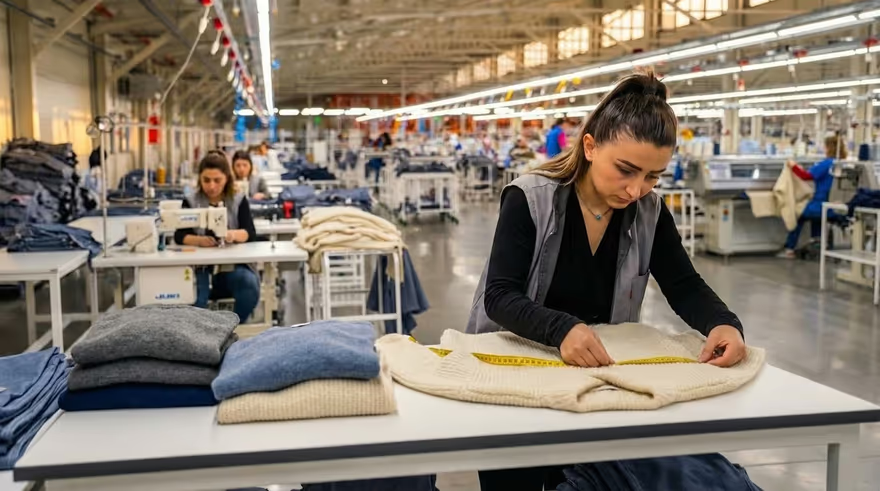
Knitwear export documentation — Turkey to USA, Kiwi Giyim
Packing and export documentation: commercial invoice, packing list, and certificate of origin prepared for US import

The Four Requirements

01

Fiber Content

Generic fiber names with the percentage of each by weight, in order of predominance — e.g. "60% Cotton, 40% Acrylic." Wool has its own rules under the Wool Act.

02

Care Instructions

A permanent care label with washing, bleaching, drying and ironing guidance, per the FTC Care Labeling Rule — based on a reasonable basis for the instructions given.

03

Country of Origin

"Made in Türkiye" — Customs marking that must be conspicuous, legible and permanent, identifying where the garment was made.

04

Identity (RN or Name)

The name of the manufacturer, importer or dealer — or a registered RN number standing in for it.

The Details That Catch People Out

1

Permanence & placement

Fiber, care and origin information generally needs to be on a label firmly attached for the useful life of the garment — typically the neck and a side seam — not a hangtag that falls off.

2

English, and accurate

Required information must appear in English. The fiber percentages have to match what's actually in the yarn — your mill certificate should back up the label.

3

Trims and decoration

Linings, ornamentation and small amounts of "other fibers" have specific disclosure rules. Tell your manufacturer the full construction so the label is built right the first time.

How We Handle It

We produce to your label spec — fiber content from the actual yarn, permanent care and origin labels, your brand's RN or name, applied at finishing. You supply the artwork and any brand-specific requirements; we build the garment to match and pass you the documentation. This is general information, not legal advice — your importer of record stays responsible for final compliance.

Compliance Resource

US Sweater Import Compliance Guide

Full compliance overview: FTC labeling, HTS classification, UFLPA and Prop 65.

See compliance guide →

Need labels done right at source?

Send your tech pack and label spec. We'll confirm construction, fiber and labeling on the sample before bulk — so what lands at US Customs is already correct.

Related Guides

→ Forced Labor Compliance in Knitwear Supply Chains → UFLPA & Knitwear: A US Importer's Checklist → Prop 65 & Imported Knitwear
WhatsApp