01
How Intarsia Works
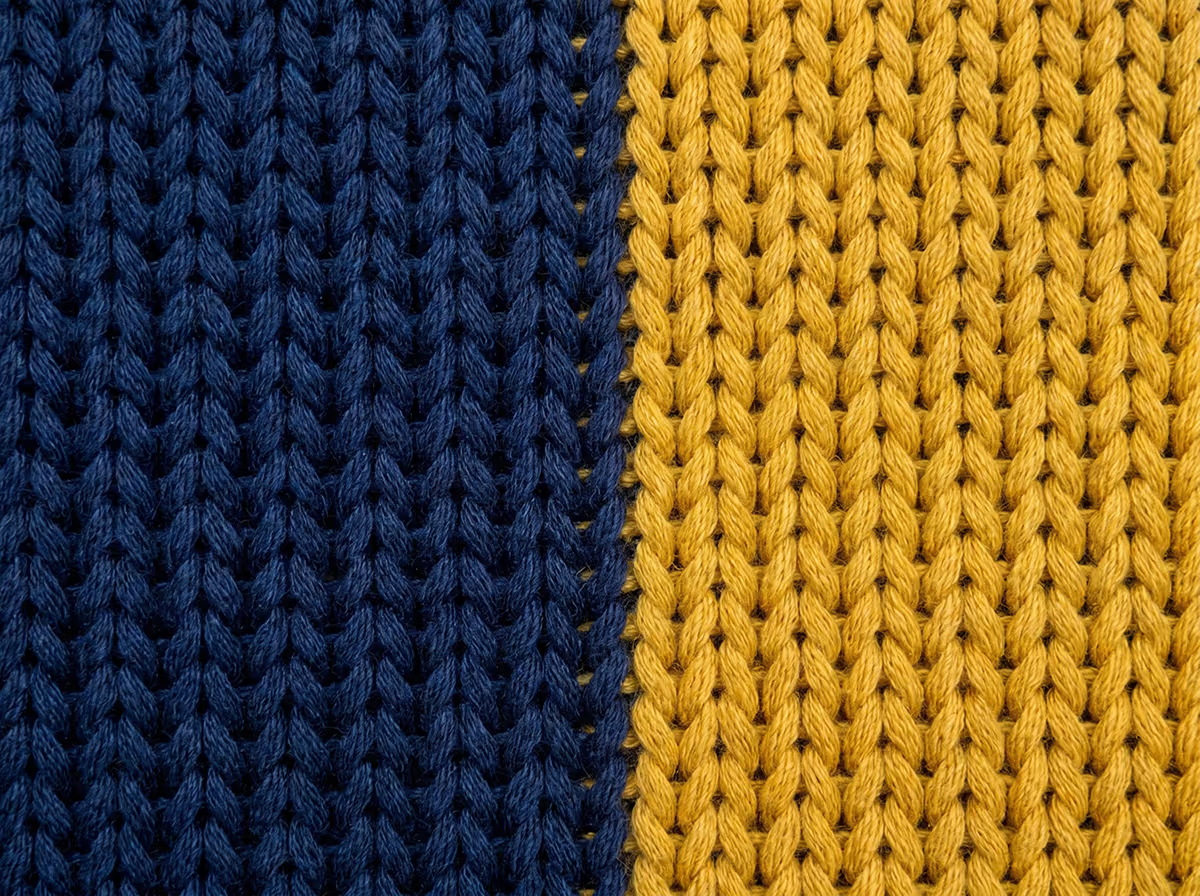
In intarsia, the knitting machine uses a separate yarn carrier (or "carrier finger") for each distinct color block within a single course (row). The yarn does not float across the back of the panel — it only knits within its designated color zone. At the boundary between two colors, the yarns are twisted together (interlocked) to prevent holes or gaps at the color join. This twist point requires precision: poor intarsia execution shows gaps, loose joins, or color bleeding at the boundary. The reverse side of intarsia is clean — individual yarn tails per color section, not continuous floats across the width.
02
Machine Requirements
Not every flat-knit machine can produce intarsia. Standard single-system flat-knit machines do not support intarsia. Intarsia requires a machine with an intarsia carriage — a specialized carriage system that can manage multiple independent yarn carriers across the needle bed simultaneously. Stoll CMS machines with intarsia modules, Shima Seiki SES or similar systems are the standard machines for intarsia production. Confirm machine capability explicitly with any factory before specifying intarsia — if they cannot do it, they may attempt to substitute with jacquard (which gives a different result) or refuse the order.
03
MOQ and CMT Implications
Intarsia production is significantly slower than standard flat-knit. Each course must be knitted with multiple independent carrier passes, which reduces the machine's production speed substantially. This means CMT (cut, make, trim) cost for intarsia is higher than for equivalent gauge plain or even cable-knit production. On smaller orders (250-piece minimum), the setup cost and programming time are amortized over fewer pieces, increasing unit CMT further. This does not make intarsia impractical for 250-piece MOQ orders, but it does mean the CMT will be meaningfully higher than a comparable non-intarsia design — typically 30–60% more depending on complexity.
04
Design Constraints
The number of simultaneous color blocks in a single row is limited by the number of carrier slots available on the machine. Typical intarsia machines support 4–8 independent carriers simultaneously (exact number depends on machine model and configuration). A design with 6 separate color blocks in a single row is producible; a design with 15 simultaneous color zones in one row is not feasible on standard intarsia machines. Additionally, very narrow color blocks (less than 8–10 stitches wide) become difficult to execute with precise joins — the color boundary resolution has practical limits. Design with intarsia's carrier limit in mind: fewer, larger, bolder color zones are the technique's strength.