01
How Floats Work
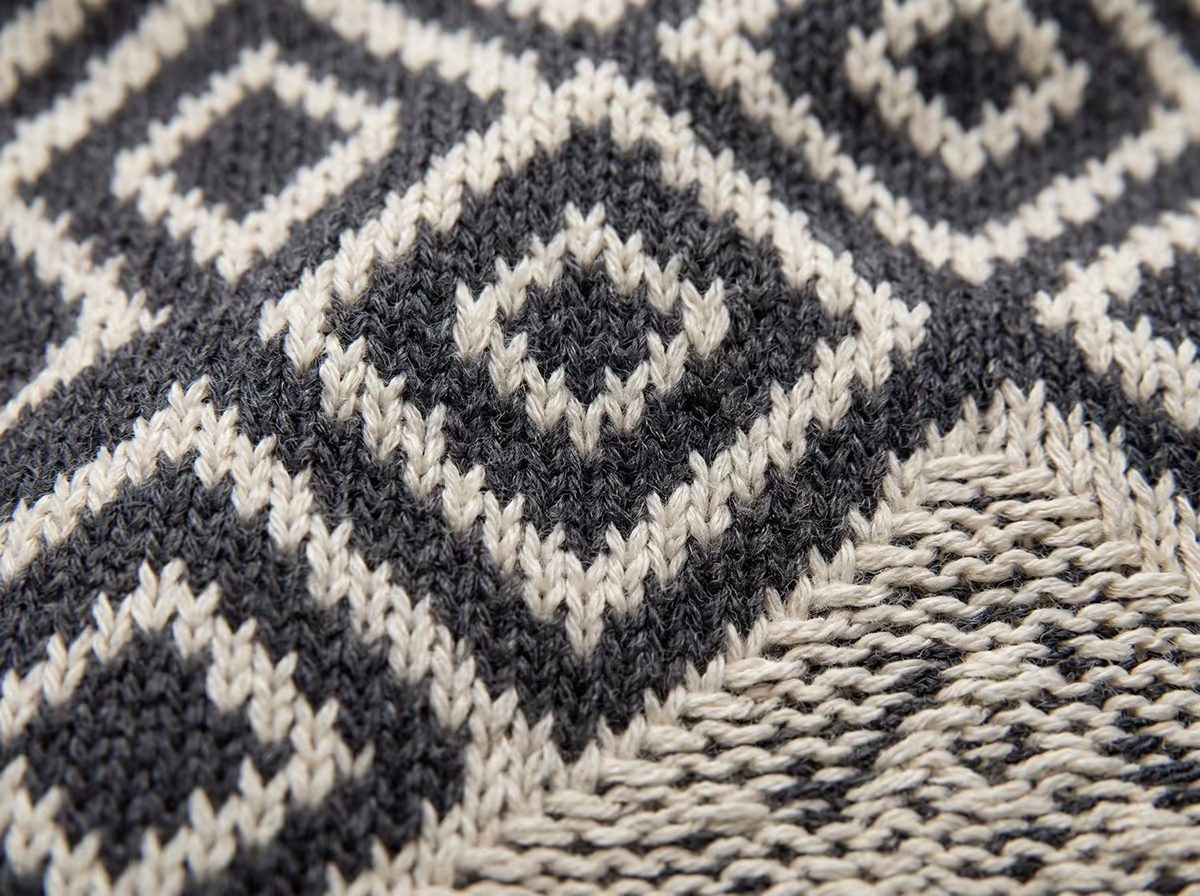
In a two-color jacquard row, both yarns travel across every course (row). When color A is knitting, color B floats across the back and vice versa. The length of a float — the distance the non-knitting yarn travels between two active stitches — matters enormously for quality and wearability. Short floats (1–4 stitches) are tight and stable. Long floats (8+ stitches) are loose, can snag on fingers when dressing, and distort the face of the fabric by pulling it inward. The practical rule: floats should not exceed 5–7 stitches without being "caught" (anchored) by the active yarn. When your pattern has large areas of one color, the design must either be adjusted or float catches must be programmed in — which affects pattern purity on the back but improves stability.
02
Double-Face Jacquard
Double-face (or double-layer) jacquard eliminates floats entirely by using a two-layer construction: the face and back of the fabric are knitted simultaneously, with the pattern color appearing on the face layer and the ground color backing it cleanly on the reverse. The result is a reversible fabric with no floats, cleaner interior, and heavier weight than single-face jacquard of the same gauge. Double-face costs more in CMT and yarn (double the yarn consumption), is heavier and warmer, and suits structured outerwear-weight pieces rather than lightweight sweaters. For blankets or coat-weight knitwear, double-face jacquard is the premium option.
03
Pattern Repeat Logic and Color Limits
Jacquard pattern repeats must be technically correct for flat-knit machine programming. The repeat must divide evenly into the stitch count of the panel width. Patterns with asymmetric repeats that don't divide cleanly into the stitch count cause misalignment at seams. For a 2-color jacquard, both colors run in every row — the pattern switches between them stitch by stitch per the programmed design. For 3+ colors, some machines can handle this in a single pass; others require multiple carriage passes, which slows production. Most standard flat-knit jacquard runs in 2 colors per row. Complex multi-color jacquard (3+ colors, irregular pattern) should be confirmed for machine capability before specifying.
04
Setup Cost and MOQ Economics
Every jacquard design requires machine programming: the pattern is digitized and loaded into the flat-knit machine's control system. This setup time is real labor and cost. For standard geometric or Nordic patterns that factories have in their library, setup cost is low. For custom patterns (your brand's proprietary motif, a licensed artwork), programming from scratch adds setup cost that is amortized across the run. At a 250-piece minimum, a complex custom jacquard pattern has a meaningful setup cost per unit. Simpler repeat patterns (stripes, small geometric) have lower setup cost and are more economical at smaller MOQ. Request the setup cost breakdown separately from CMT when quoting a custom jacquard design.