Merino wool is the most versatile performance fiber in knitwear. It regulates temperature across a wider range than synthetic alternatives, wicks moisture without the next-day odor of polyester, and has a soft hand that sits next to skin without irritation — when the micron count is right. For US brands building a considered knitwear range, merino offers a fiber story that resonates with an increasingly informed consumer. Turkish flat-knit production gives you access to this fiber in EU-calibrated quality at a 250-piece MOQ.

Premium knitwear yarn — certified supply chain, Kiwi Giyim Turkey
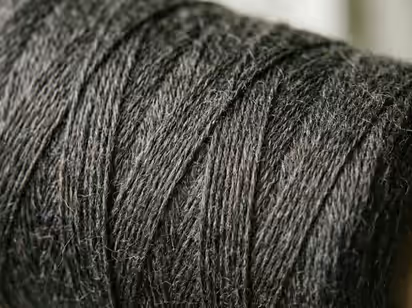
Premium yarn cones sourced from OEKO-TEX certified Turkish and Italian spinners

Understanding Merino Micron Count

01

Superfine: 17–19 Micron

The softest category — next-to-skin comfortable even for wool-sensitive wearers. Used in fine-gauge (12gg, 14gg) styles and performance base layers. Fiber cost is higher than standard merino; appropriate for premium positioning at $150+ retail. Mulesing-free options are available and increasingly expected by US buyers.

02

Fine: 19–21 Micron

A practical balance of softness and cost for most contemporary knitwear applications. Works across gauge ranges (10gg–14gg). The most common merino grade in European-export Turkish knitwear. Soft enough for most wearers at most body contact points; may prickle slightly at the neck on sensitive skin — specify the application when selecting grade.

03

Standard: 21–24 Micron

Heavier-weight, more textured hand. Well suited to 7gg and 10gg midweight sweaters, outerwear-adjacent styles and structured shaping where a slight texture is appropriate. Lower fiber cost makes it viable for mid-market positioning. Less soft against neck/wrist, so garment design should account for this (rib contrast, collar treatment).

04

Merino Blends

Merino-nylon (typically 80/20) adds durability for high-wear styles like elbow-patch sweaters, performance pieces or socks — nylon reduces pilling and abrasion. Merino-cashmere blends improve hand while controlling pure cashmere cost. Merino-silk adds drape. Each blend changes knit behavior and must be specified in the tech pack; results differ from 100% merino in shrinkage, recovery and hand.
Certifications: RWS and OEKO-TEX

Responsible Wool Standard (RWS) certifies that wool comes from farms with progressive land management and animal welfare practices, including mulesing-free shearing. RWS-certified merino yarn is available through our supply chain; if your brand messaging includes animal welfare claims, this certification is the chain-of-custody document that substantiates them. OEKO-TEX Standard 100 certifies that every component of the finished garment — yarn, thread, dyes, auxiliaries — is free from harmful substances at legally defined thresholds. This is our standard offering for EU export and available on US orders. Both can be combined and should be specified at the development stage, not after bulk production.

Gauge Options and Their Applications

Gauge selection for merino follows the intended use and weight. 7gg produces a chunky midweight suitable for outerwear-adjacent and cable-knit structures — classic American sweater territory. 10gg is the workhorse gauge for everyday lifestyle knitwear: not too heavy, not too fine, holds texture well. 12gg moves into fine-gauge territory — lighter, drapier, appropriate for year-round styles and layering. 14gg is fine-gauge in the premium sense: a close, refined fabric that reads elevated. For performance applications (active layering, base-layer-adjacent), 14gg superfine merino is the relevant combination. Heavier gauges suit structured wardrobing; finer gauges suit versatility and drape.

Honest Cost Comparison

Merino from Turkey is not automatically cheaper than merino from China. At equivalent fiber grade and construction quality, the cost differential is relatively modest — and for brands that need EU-compliant chemistry, RWS certification and a factory oriented toward quality rather than volume, the Turkish option offers better alignment. We're not competing on price against lowest-cost volume producers; we're competing on quality-to-cost ratio for brands that care about both.

Building a merino knitwear program?

Tell us your target retail price, intended use and fiber grade preference. We'll advise on gauge, construction and certifications and provide a transparent quote.

Related Guides

→ Cable Knit Sweater Manufacturing for US Brands → Chunky Knit Sweater Manufacturing for US Brands → Cardigan Manufacturing for US Private Label Brands
WhatsApp