Oversized knitwear has been a US contemporary retail anchor for several seasons, and its appeal is unlikely to disappear — ease, comfort and a relaxed aesthetic are durable consumer preferences, not trend-dependent ones. But "oversized" is one of the most frequently misspecified silhouettes in knitwear development. The assumption that it's simply a larger version of a standard sweater produces garments that look accidentally large rather than intentionally relaxed. Properly developed oversized knitwear requires explicit specification of the proportional relationships between drop shoulder placement, body width, body length and sleeve length — and these don't follow standard grading rules.

Fully-fashioned knitwear panel — shaped without cutting, Kiwi Giyim
Fully-fashioned shaping: armhole and neckline curves knitted in, zero cut waste

What to Specify in an Oversized Brief

01

Drop Shoulder Placement

The drop shoulder point is where the shoulder seam falls on the upper arm — typically 4–8 cm below the natural shoulder point, sometimes more. This measurement defines the entire silhouette: too little drop and the garment reads as a regular sweater with a wide body; enough drop and the shoulder line collapses in the intended way, creating the characteristic relaxed fall of the sleeve. Specify in centimeters from the neck-shoulder seam to where the shoulder seam sits on the arm. This must be explicitly called out in the tech pack, not left to the factory's interpretation of "oversized."

02

Body Width and Ease

Oversized bodies require explicit finished measurements, not ease calculations from a standard size. State the intended finished chest width at a specific position (typically 1 cm below the armhole for flat-knit). Grade the finished measurements independently across the size run — don't simply add 10 cm ease to a standard grade, as the resulting proportions may not be consistent from XS to XL. A size XS with 30 cm oversized ease and a size XL with the same ease will look very different on the body. Intentional oversized grading requires deliberate decision-making per size.

03

Sleeve Length and Extended Proportions

Oversized styles often feature sleeves that extend beyond the wrist — either intentionally (covered-hand aesthetic) or as a result of the drop shoulder shifting the sleeve length. Specify sleeve length from the drop shoulder seam point (not from natural shoulder), and specify the intended finished sleeve length at the wrist. If you want the sleeve to cover the hand by 4 cm in a medium, state that explicitly. Extended-length sleeves also mean more fabric, more yarn per unit and higher material cost — factor this in from the outset.

04

Gauge and Structure

Oversized knitwear is most commonly produced at 5gg–10gg — heavier gauges suit the cozy, voluminous aesthetic and are more forgiving of the large dimensions. Fine-gauge oversized (12gg, 14gg) is possible and can be very effective for a drapey, luxurious-feeling piece in merino or cashmere, but requires careful stitch tension management across the wider knit width. WHOLEGARMENT oversized at fine gauge is a premium positioning play — the absence of side seams in a wide-body garment produces a particularly clean drape.
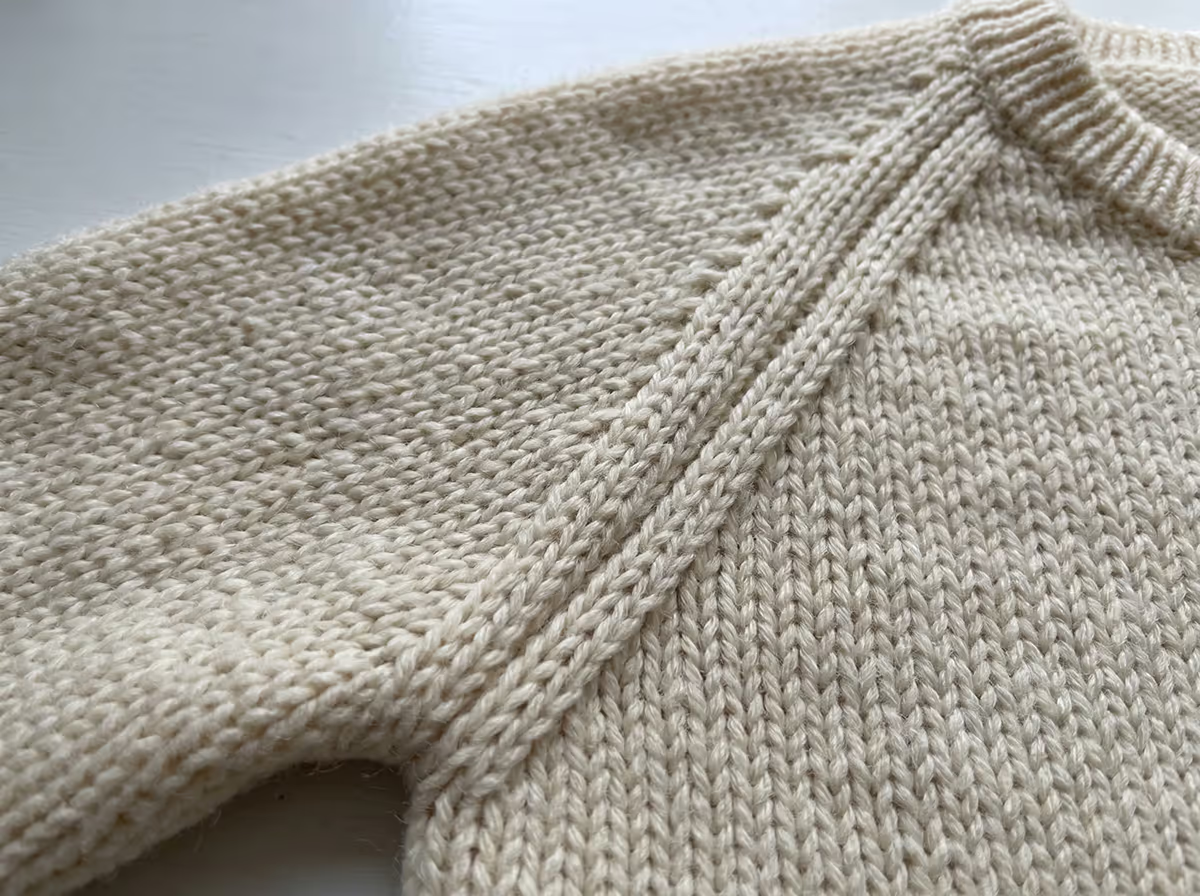
Yarn Weight, Material Cost and the Oversized Reality

Oversized sweaters use more yarn than their fitted counterparts — significantly more. A chunky-gauge (7gg) oversized pullover may use 600–800g of yarn per unit where a fitted crewneck in the same gauge uses 350–450g. At the same yarn cost per kilo, the material cost per oversized unit is substantially higher. This is not negotiable — it's a function of the dimensions. A brand that calculates oversized unit cost based on fitted-style material consumption will be surprised at the quote. Factor the yarn weight into your cost model from the first development conversation, not after the quote arrives.

Shrinkage Specification: Why Oversized Makes It Critical

Shrinkage is proportional to dimension — a 10% linear shrinkage on a 70 cm body width loses 7 cm, where the same shrinkage on a 50 cm fitted body loses 5 cm. In absolute terms, oversized knitwear is more affected by shrinkage than fitted styles, and the consumer experience of a shrunken oversized sweater is dramatic. Shrinkage specification must be resolved in development: pre-shrinking yarn before knitting, setting post-knit washing protocol to stabilize dimensions, and writing a care label that reflects the realistic aftercare requirement. "Hand wash, lay flat to dry" is the honest recommendation for most wool-content oversized knitwear; if you want machine-washable, specify the fiber (superwash-treated merino, cotton) from the outset.

WHOLEGARMENT Oversized: What It Adds

In a wide-body oversized sweater, the side seam is where most of the structural variation appears — uneven seam tension, slight twist, bulk at the hip. WHOLEGARMENT eliminates this entirely. A WHOLEGARMENT oversized piece drapes from the shoulder with no interruption — the fabric falls continuously from neckline to hem with no seam line to resist or distort the movement. For brands positioning oversized knitwear as a premium or contemporary luxury piece (not as a commodity basics item), WHOLEGARMENT construction provides a qualitative difference that shows in the photo, the fitting room and the repeated wear.

Developing an oversized knitwear program?

Share your dimension brief, gauge preference and fiber direction. We'll advise on drop shoulder specification, material cost implications and WHOLEGARMENT feasibility — and provide a transparent quote.

Related Guides

→ Cable Knit Sweater Manufacturing for US Brands → Chunky Knit Sweater Manufacturing for US Brands → Cardigan Manufacturing for US Private Label Brands
WhatsApp