Merino base layers, moisture-management blends and seamless WHOLEGARMENT construction occupy a different spec world than fashion knitwear. Here's what to know before writing the tech pack.
Performance knitwear is defined by what the fabric does — regulates temperature, manages moisture, resists odor, recovers its shape after stretch — rather than primarily how it looks. That shifts the entire manufacturing specification: yarn choice, gauge, construction method and test protocols all change. It's a narrower, more demanding category than fashion flat-knit.
Extra-fine merino (17.5 micron or finer) is the benchmark for next-to-skin comfort. It's naturally temperature-regulating and odor-resistant. The production requirement: fine-gauge knitting (14gg–16gg), careful tension management to avoid pilling, and WHOLEGARMENT construction to eliminate seam irritation at contact points. Merino base layers are a natural fit for seamless production.
Polyester, nylon and elastane blends are used where wicking, stretch-recovery and durability outweigh natural fiber softness. Polyester-merino blends are common in mid-layer performance pieces. These yarn types require different machine settings and tension calibration than pure wool, and they behave differently in wash testing — specify the care protocol early.
Seamless WHOLEGARMENT construction eliminates side seams and shoulder seams — the friction points that irritate in next-to-skin performance wear. For base layers, mid-layers worn under a harness or pack, and any piece with extended contact, seamless construction is a meaningful functional benefit, not just an aesthetic one.
Athleisure sits between performance and fashion: the garment needs some stretch and recovery, drapes well, and wears through multiple uses without deforming. Workwear knitwear layers — thermal mid-layers, insulating vests in knit construction — prioritize durability and dimensional stability. Both categories require stretch/recovery testing beyond standard AQL visual inspection.
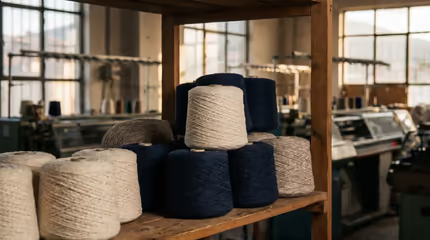
In fashion knitwear, the key spec is visual: stitch structure, colorway, silhouette. In performance knitwear, additional functional specs take over: yarn twist level (higher twist = more durable, less soft), gauge relative to stretch target, elastane percentage and placement (full body vs ribbed cuffs), wash/wear cycle testing (pilling, dimensional change after 20 washes), and moisture management test method (AATCC 195 for liquid moisture management in synthetic blends). If your tech pack doesn't include these, the factory will make assumptions — and they might not be the right ones.
Kiwi Giyim is a flat-knit factory. We produce performance knitwear in the categories above — merino base layers, seamless WHOLEGARMENT pieces, mid-layer knits. We do not produce circular-knit (tube) seamless activewear (that's a different machine category entirely), woven technical fabrics, or cut-and-sew jersey. If you're sourcing a full activewear range, the flat-knit layer is where we fit; the balance of the range needs different suppliers.
Manufacturing Service
Technical flat-knit for athletic and outdoor US brands — moisture management, stretch, durability.
See performance knitwear →Share the intended end use and any existing specs. We'll advise on construction method, fiber and gauge before sampling.