Full turtleneck, mock neck, cowl neck and funnel neck — each is a different construction requiring different specifications. Here's what distinguishes them and how to brief them correctly for flat-knit OEM production in Turkey.
The turtleneck family is the most commercially resilient neckline in US sweater retail. It has cycled in and out of trend over decades but never disappeared — and in its current iteration as a quiet luxury and minimalist staple, it's performing strongly across contemporary and contemporary-luxury segments. The four main constructions (full turtleneck, mock neck, cowl neck, funnel neck) are often used interchangeably in conversation but are meaningfully different in both construction and aesthetic output. Knowing which you're specifying — and how to specify it — prevents the most common development misalignment in neckline styles.
A long rib neck (typically 22–28 cm total height) designed to fold over and still cover the neck adequately — so the finished folded height is 11–14 cm. The fold creates a double-layer at the neck, which affects warmth, weight and visual bulk. Specify total neck height before folding and whether the edge is finished or turned (turned edge has a cleaner appearance; finished edge has a visible termination). Also specify neckline opening width — too tight and it's difficult to put on; too wide and the fold falls loosely.
A short neck rib (typically 8–12 cm) that stands upright without folding. Simpler construction than a full turtleneck, lower yarn consumption, and a cleaner visual profile. Suits styling under jackets and blazers where a full turtleneck fold would create too much bulk. Specify neck height (finished, standing), neck opening width and whether the neck is a separate rib panel or knitted as one with the body (one-piece is cleaner; attached panel allows different stitch structure or color).
A draped, relaxed neck that falls in soft folds around the collarbone and upper chest. Construction requires a significantly wider neck circumference than standard — the drape comes from excess circumference that bunches naturally. Cowl necks require a fiber with good drape (merino, cashmere, silk-blend) and a gauge that allows the fabric to flow rather than hold shape. Structured yarns (high-twist cotton, textured wool) fight the drape and produce an awkward cowl. Specify finished neck width, intended drape depth and fiber — don't leave the drape behavior to interpretation.
A wide, slightly flared neck that stands up without the height of a turtleneck — typically 10–15 cm, with a wider circumference that flares outward rather than folding. The visual effect is architectural; it suits structured styles and premium positioning. Construction requires careful attention to neck-body ratio — too wide and the funnel collapses; too narrow and it reads as a mock neck without the intended flare. Sample and fit-review is especially important for funnel necks before committing to bulk grading.
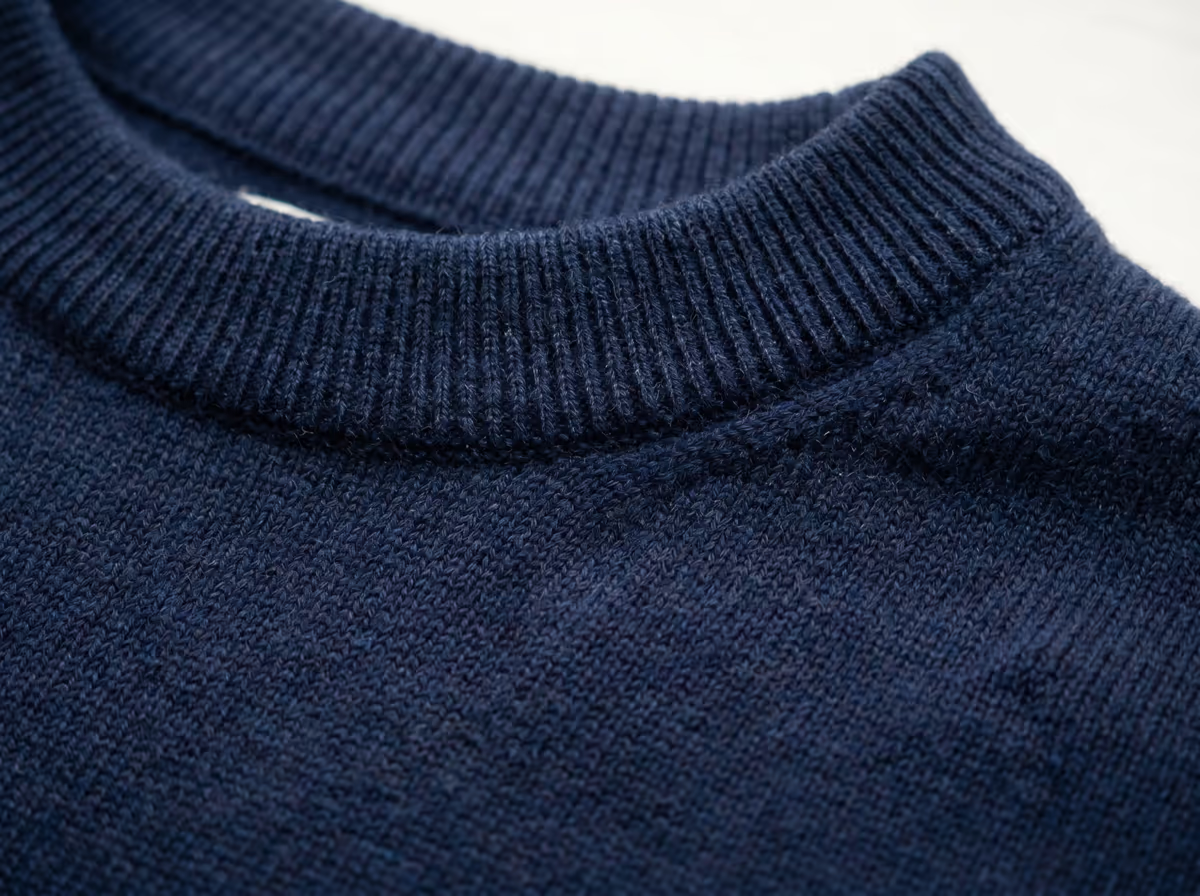
The turtleneck is one of the silhouettes where WHOLEGARMENT (Shima Seiki 3D knitting) offers the clearest visible advantage. In conventional flat-knit, the neck rib is knitted as a separate panel and attached — creating a seam at the neck-body join that is visible and sometimes slightly bulky when the turtleneck is folded. In WHOLEGARMENT construction, the neck transitions continuously from the body, with no join seam. The resulting piece has a seamless neck-body transition and no side seams — the drape and fit are qualitatively different. For contemporary luxury or fine-gauge turtleneck styles, WHOLEGARMENT construction is worth the additional development and production investment.
Fine-gauge turtlenecks (12gg, 14gg) in cashmere or superfine merino are the quiet-luxury staple — the piece that reads as considered and elevated at a retail of $180–$350. The neck fold at fine gauge is thin and refined, conforming closely to the neck. Midweight turtlenecks (7gg, 10gg) in lambswool or standard merino read warmer and more classic — the traditional American winter turtleneck. The fold at these gauges has more body. Chunky turtlenecks (5gg) create significant visual presence at the neck — a strong aesthetic choice that suits specific brand identities. Each gauge range has different construction requirements for the neck rib; a construction that works at 10gg may not translate directly to 14gg without adjustment.
The turtleneck's current positioning in US contemporary retail is clean and minimal — sold as a year-round layering piece in fine gauge, or as a fall/winter anchor in midweight merino and cashmere. The quiet luxury aesthetic that has been driving US contemporary women's and menswear since 2022 has made the turtleneck — particularly in neutral colors, fine gauge, premium fiber — a consistent performer. US brands building or extending a turtleneck program are doing so in a category with proven demand and clear consumer expectations. Construction quality is what converts a browser into a repeat buyer.
Share your construction brief, target gauge and fiber direction. We'll advise on WHOLEGARMENT feasibility, neck spec details and development timeline and provide a transparent quote.