Cashmere is the fine, dehaired undercoat of the cashmere goat — the soft down layer that grows under the coarse outer guard hair and is combed out during the spring molt. A single goat yields only a small amount of usable down per year, typically well under 200 grams after dehairing, which is why the fiber carries the price it does. But "cashmere" covers a wide quality range: the difference between the finest down and coarse, guard-hair-contaminated fiber is the difference between a sweater that stays soft for years and one that pills within weeks. The industry sorts that range into grades — usually labeled A, B and C — based on two measurements: fiber diameter (in microns) and fiber length (in millimeters). Understanding those two numbers is the single most useful thing a knitwear buyer can do before sourcing cashmere.
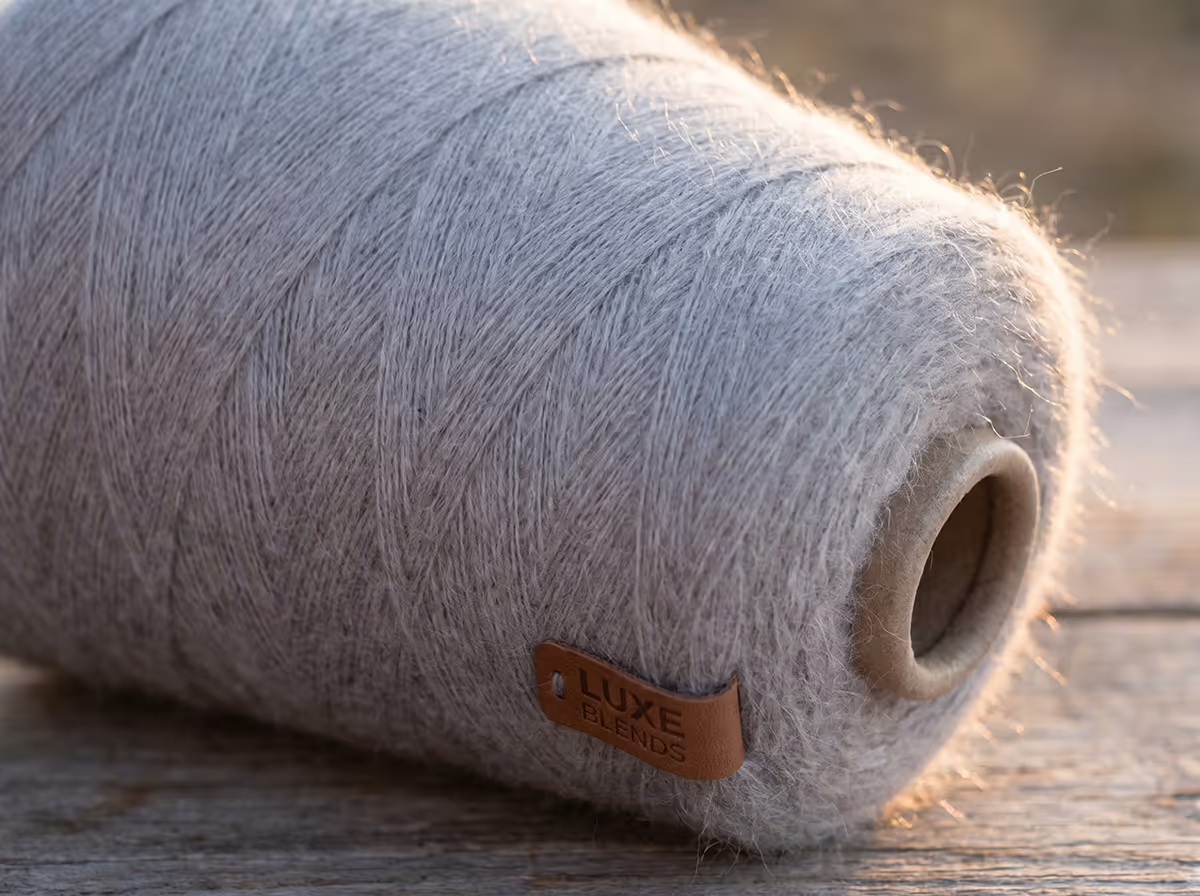
Cashmere yarn cones — fiber grading by micron and length
Cashmere yarn — grade is set at the fiber stage, before spinning

The Three Types of Cashmere: Grade A, B and C

One caveat before the numbers: there is no single international body that certifies cashmere grades. The A/B/C bands below are the convention used across the trade, and the exact cut-off points vary slightly from one dealer or spinner to another. Treat the grade letter as shorthand for the underlying measurements — and always ask for the measurements themselves.

A

Grade A — Finest & Longest

Diameter: roughly 14–15.5 microns average. Length: about 34–36 mm. This is the longest, finest down, typically from the underbelly and neck of the goat. Long, fine fiber spins into a smooth, even, strong yarn that needs less twist to hold together — which translates into a softer hand, better drape and noticeably less pilling in the finished garment. Grade A is what luxury knitwear programs specify, and it commands the highest raw-fiber price.

B

Grade B — Mid Range

Diameter: roughly 16–19 microns average. Length: around 30–34 mm. Still genuine cashmere down, but coarser and somewhat shorter than Grade A. A well-spun Grade B yarn produces a perfectly good sweater — slightly less soft against the skin, slightly more prone to pilling over time. Much of the mid-market cashmere sold at accessible retail prices is Grade B fiber, and there is nothing dishonest about that when it's priced and labeled accordingly.

C

Grade C — Coarse & Short

Diameter: above 19 microns, in some lots approaching 30. Length: short, often under 28 mm. Grade C sits at or beyond the boundary of what can honestly be called cashmere at all: it is coarser than fine merino, often contaminated with guard hair, and produces yarn that feels rougher and sheds fiber ends quickly. Under US labeling rules (more on this below), much Grade C material cannot legally be labeled "cashmere" — a point worth knowing when a price looks too good to be true.

Why Micron and Fiber Length Drive Everything

Micron (fiber diameter) determines how the fabric feels against skin. Human skin generally perceives fibers above roughly 28–30 microns as prickly; the further below that threshold the average diameter sits, the softer the hand. At 14–15 microns, Grade A cashmere is finer than almost any sheep's wool — that is the physical basis of the "cashmere feel."

Fiber length determines durability and pilling behavior. Yarn is made of overlapping fibers twisted together; every fiber has two ends, and short fibers mean more ends per centimeter of yarn. Those loose ends work their way to the fabric surface with wear and friction, tangle, and form pills. Long fibers anchor deeper in the yarn, so a garment knitted from long-staple Grade A down pills less and holds its surface longer. Length also lets the spinner use less twist, keeping the yarn — and the fabric — softer.

PropertyGrade A (~14–15.5µ)Grade B (~16–19µ)Grade C (>19µ)
Hand feelExceptionally soft, no prickleSoft, slightly less refinedNoticeably coarser, can prickle
Pilling tendencyLowest — long fibers anchor in the yarnModerate, increases with wearHigh — short fibers escape quickly
Yarn strength & evennessStrong, even yarn with low twistGood with competent spinningWeaker, less even yarn
Typical useLuxury knitwear, fine gaugesMid-market sweaters, blendsLow-cost product, filler blends
US "cashmere" labelingQualifiesQualifies if ≤19µ averageOften fails the legal definition

Grade bands are trade conventions; exact cut-offs vary by dealer and spinner. Always ask for measured values on the specific lot.

Ply and Gauge: Where Fiber Grade Meets Construction

Fiber grade is only the first quality decision — how the yarn is plied and what gauge it's knitted at shape the final garment just as much. 1-ply (a single spun strand) produces the lightest, least expensive fabric, but a single is inherently less balanced and less durable: it relies entirely on its own twist, and abrasion exposes fiber ends faster. 2-ply twists two singles together in the opposite direction, producing a balanced, denser, stronger yarn — the standard construction for quality cashmere sweaters, and the reason "2-ply cashmere" is worth specifying. Higher plies (4-ply and up) build heavier winter-weight fabrics rather than higher quality per se.

One honest nuance buyers should hold onto: a well-spun 2-ply Grade B yarn can outperform a poorly spun 1-ply Grade A yarn in real-world wear. Grade sets the ceiling; spinning, plying and knitting decide how close the garment gets to it.

On gauge: cashmere is a fine fiber and needs fine yarn counts to knit into a stable fabric — practically that means 7gg and finer, with ultra-fine 14–16gg knitwear requiring counts around Nm 72 and finer, usually as 2-ply. It is not suited to chunky 3gg or 5gg constructions, where the needle spacing is too wide for fine yarn. For a fuller picture of how gauge and count interact, see our knitwear gauge guide and yarn count & ply explained.

How to Verify a "Grade A" Claim

Because no authority polices the term, "Grade A cashmere" on a supplier quote or a product page is a marketing claim until it's backed by data. Here is what a serious buyer asks for:

01

Fiber Test Report for the Lot

Ask for a lab report showing average micron and mean fiber length for the actual yarn lot you'll be buying — not a generic brochure figure. Fiber diameter is routinely measured by laser-scan or OFDA instruments, and reputable spinners test every lot. If the answer is "it's Grade A, trust us," treat that as no answer.

02

Spinner Identity

Ask which mill spun the yarn. Established cashmere spinners — Italian, Chinese, Mongolian, Turkish — stand behind their lot documentation, and the spinner's name lets you cross-check reputation. A supplier who won't name the spinner is asking you to buy blind.

03

Composition Test on a Finished Sample

Quantitative fiber-composition testing at a third-party lab (SGS, Intertek, Bureau Veritas and similar) confirms the finished garment is what the label says — 100% cashmere, or the stated blend ratio — and can flag guard-hair contamination or substituted fiber like fine wool. For a production program, testing a garment from the actual bulk run is standard practice.

04

Price Sanity Check

Grade A raw fiber is scarce and expensive, and no supply chain can sell below its input cost for long. If a "100% Grade A cashmere" quote undercuts the market dramatically, the fiber is almost certainly shorter, coarser, blended or mislabeled. Price is not proof of quality — but an impossible price is reliable proof of a problem.

US buyers have a legal backstop here: under the Wool Products Labeling Act, fiber labeled "cashmere" must be the fine dehaired undercoat of the cashmere goat, with an average diameter of 19 microns or less and no more than 3% of fibers exceeding 30 microns. That makes composition testing not just a quality tool but a compliance one for anything sold in the US market.

Cashmere vs Merino vs Blends: An Honest Comparison

Cashmere is not automatically the right answer. The honest comparison looks like this:

FactorCashmereSuperfine MerinoCashmere Blend (10–30%)
Typical fiber diameter~14–16µ (Grade A/B)~17.5–19.5µBetween the two
Softness / handBenchmark softnessVery soft, slightly firmerClearly softer than pure merino
Durability & resilienceDelicate — needs careMore elastic, recovers shape, machine-washable optionsMerino structure adds durability
PillingPills more, especially lower gradesPills less in daily wearLess than pure cashmere
Warmth for weightHighestHighHigh
Yarn costHighestModerateMid — scales with cashmere %

For high-wear items — everyday layering pieces, kids' knitwear, anything machine-washed — merino or a blend often serves the end customer better than pure cashmere. Blends in the 70/30 or 80/20 merino/cashmere range deliver genuine softness with merino's durability and pilling resistance, at a workable price point. And to state the obvious that marketing copy usually skips: no cashmere or merino garment is completely pill-free. What varies is the degree and speed of pilling — a function of fiber grade, spinning, finishing and care. We cover blend options in detail in our cashmere-merino blend guide.

Quality Control from the Manufacturer's Side

From the factory floor, cashmere grade is an input to be verified, not a label to be repeated. A competent knitwear manufacturer checks the fiber claim at three points: incoming yarn (lot test reports checked against the order spec, cone inspection for evenness and knots), knitting (tension control calibrated for fine fiber — too tight causes excess shrinkage, too loose causes instability and pilling), and finishing (a controlled wet-finishing step that sets dimensions and develops the hand cashmere is bought for — done wrong, it can felt or distort the fabric). Weight-per-piece checks against the approved sample catch yarn substitution, and pilling tests on finished fabric validate the grade claim in the way that actually matters to the end customer.

At Kiwi Giyim we work with Grade A Inner Mongolia cashmere sourced through established Italian and Turkish spinners, knitted at 12gg–14gg, alongside cashmere/merino and cashmere/silk blends for programs where the retail price needs a more workable yarn cost. Lot documentation from the spinner travels with the order and is available to the buyer.

Frequently Asked Questions

What micron count is Grade A cashmere?

Grade A cashmere has an average fiber diameter of roughly 14–15.5 microns with fiber lengths of about 34–36 mm. Grade B runs roughly 16–19 microns, and Grade C covers coarser fiber above 19 microns. These bands are industry conventions, not a legally enforced standard — which is why test reports matter more than the label.

Is 2-ply cashmere always better than 1-ply?

Not automatically. A 2-ply yarn twists two singles together, which produces a denser, more durable knit that resists pilling better than a loosely spun single. But a well-spun 2-ply yarn in Grade B fiber can outperform a poorly spun 1-ply yarn in Grade A fiber. Ply, spinning quality and knitting tension matter alongside fiber grade.

How can I verify a supplier's Grade A cashmere claim?

Ask for a third-party fiber test report showing average micron and fiber length for the actual yarn lot, ask which spinner produced the yarn, and request a fiber composition test on a finished sample. A supplier who works with graded cashmere routinely will have this data on hand; vague answers are a warning sign.

Can coarse cashmere legally be labeled cashmere in the US?

US labeling rules under the Wool Products Labeling Act require that fiber labeled cashmere is the fine dehaired undercoat of the cashmere goat, with an average diameter of 19 microns or less and no more than 3% of fibers exceeding 30 microns. Much of what trades as Grade C fails that test, so it cannot legally be sold as cashmere in the US market.

Sourcing cashmere knitwear for your brand?

Tell us your target fiber spec, gauge and retail price point. We'll come back with yarn options — graded pure cashmere or blends — with lot documentation, indicative costing and a sampling timeline.

Related Guides

→ Cashmere, Merino & Blend Knitwear OEM → Knitwear Gauge Guide: 3gg to 16gg → Yarn Count & Ply Explained → Merino Wool Sweater OEM from Turkey
WhatsApp